All winter long, Guardians fans asked the same question over and over: When are you going to fix the outfield? The silence from Cleveland’s front office only made the frustration louder. No splashy free agent. No headline trade. Just patience — and restraint.
Then, over the weekend, the move finally came.
Not Austin Hays.
Not Harrison Bader.
Not a former All-Star like Nick Castellanos.
Instead, the Guardians quietly signed Stuart Fairchild to a minor league deal, a move that barely registered nationally — but one that could matter far more than it appears at first glance.
At face value, Fairchild doesn’t look like the answer to Cleveland’s offensive problems. But dig deeper, and this signing starts to feel very on-brand — and potentially very important.
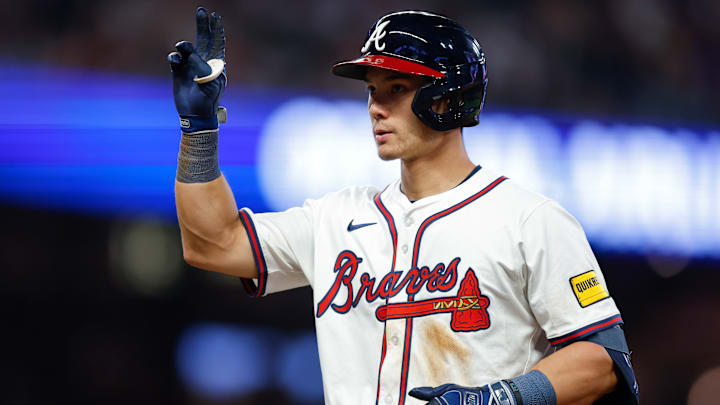
Fairchild, a former second-round pick by the Reds in 2017, has taken the long road through professional baseball. He made his MLB debut with Arizona in 2021 before returning to Cincinnati midway through 2022, where he briefly flashed real upside, hitting .279 with five home runs in just 39 games. At the time, he looked like a late-blooming outfielder who had finally found his footing.
The consistency never fully arrived.
Over the 2023 and 2024 seasons, Fairchild settled into a backup role, appearing in 191 games and hitting .222 with 13 home runs and 58 RBIs. Solid depth production — not enough to lock down a starting job, but enough to remain relevant. Last spring, the Reds designated him for assignment, and Fairchild’s career entered survival mode.
Atlanta claimed him off waivers, desperate for outfield help amid a wave of injuries. He appeared in 28 games, hit .216, and then found himself designated again once the Braves got healthy. A trade to Tampa Bay followed — but Fairchild never appeared in a game for the Rays.
Now, he lands in Cleveland.
Here’s where things get interesting.
Despite a career .223 batting average, Fairchild brings two things the Guardians desperately need: defensive versatility and right-handed balance. He can play all three outfield positions, and more importantly, he bats right-handed — a rarity on Cleveland’s roster.

At the moment, Johnathan Rodríguez is the only right-handed hitting outfielder in the organization. On the entire 40-man roster, only four players hit right-handed: Rodríguez, David Fry, Austin Hedges, and Gabriel Arias. That imbalance crippled Cleveland’s lineup in 2025, particularly against left-handed pitching.
Fairchild doesn’t solve everything — but he addresses a real structural issue.
Unlike Rodríguez’s free-swinging, power-first approach, Fairchild is more contact-oriented, which fits neatly into a Guardians lineup built around putting the ball in play. Last season, albeit in a small sample, he chased just 19% of pitches outside the zone, an elite mark that reflects plate discipline Cleveland values deeply.
Defensively, the metrics are encouraging. Fairchild has graded out as above-average in the outfield every season he’s played, offering reliable glove work without drama. In other words, he does exactly what a fourth outfielder is supposed to do — and sometimes more.
That matters because Cleveland’s outfield production in 2025 was, frankly, brutal. Over a full 162-game season, the Guardians got next to nothing offensively from the position outside of Steven Kwan. Injuries, inconsistency, and imbalance left the lineup exposed night after night.
Looking ahead to 2026, Kwan, Chase DeLauter, George Valera, and Nolan Jones appear entrenched as the core outfield options. But there are still innings and at-bats to account for — especially after the departure of Lane Thomas and with the organization hoping to move Angel Martínez back to the infield, where he’s more natural.
That’s where Fairchild fits.
He doesn’t block prospects.
He doesn’t demand playing time.
He doesn’t cost real money.
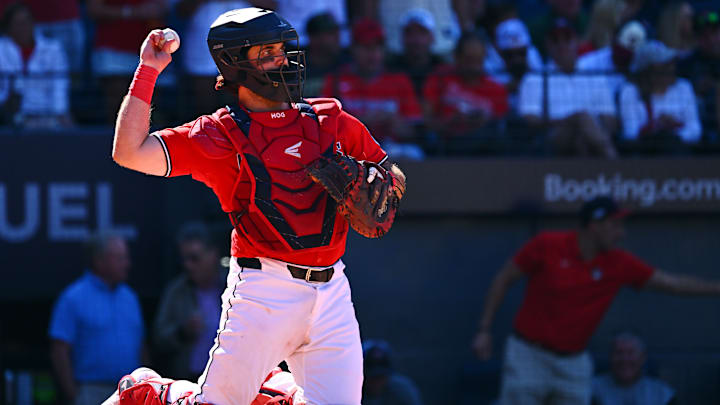
But if injuries strike — or if one of the young outfielders struggles — Fairchild suddenly becomes a plug-and-play option who won’t compromise defense or approach.
The Guardians have made a habit of striking gold with minor league pitching signings in recent years, turning overlooked arms into contributors. Position players, particularly outfielders, have been another story. The organization simply hasn’t hit on many low-risk bats in that area.
Fairchild could be different.
He won’t arrive with fanfare. He won’t sell tickets in March. But he represents the exact type of calculated gamble Cleveland prefers — one that preserves flexibility while quietly addressing a weakness.
In a winter defined by frustration and restraint, this signing won’t satisfy everyone. But baseball seasons aren’t always changed by the loudest moves. Sometimes, they turn on players no one was paying attention to.
The Guardians finally added an outfielder.
It just wasn’t the one anyone expected.
And if Stuart Fairchild finds a role in Cleveland, this “minor” deal may not feel so minor for long.
Leave a Reply