The alleged gambling scandal surrounding Cleveland Guardians closer Emmanuel Clase has already shaken Major League Baseball. Now, it is reshaping the betting landscape itself.
According to a federal indictment unsealed last month in New York, Clase is accused of intentionally manipulating pitch-level outcomes — not wins or losses, but the smallest details of a game: first-pitch balls, pitch speed, and other micro-events that are nearly invisible to the casual fan yet highly valuable in the gambling world. Prosecutors allege that as early as 2023, Clase deliberately threw pitches off the plate or below his maximum velocity in exchange for cash, allowing bettors with inside knowledge to profit.
Those bettors, the indictment claims, earned approximately $450,000 by exploiting specific pitches on specific dates in 2023 and 2025.
Clase has denied all allegations. But if convicted, he could face up to 65 years in prison, a staggering number that underscores how seriously federal authorities are treating the case.
In response to the growing integrity concerns, Major League Baseball moved swiftly — but perhaps belatedly. Last month, MLB announced that pitch-level prop bets will now be capped at $200, a dramatic shift aimed at removing the financial incentive to manipulate individual pitches.

“These pitch-level bets present heightened integrity risks,” MLB said in its announcement. “They focus on one-off events that can be determined by a single player and can be inconsequential to the outcome of the game. The risk on these markets will be significantly mitigated by this new action.”
In practical terms, the type of betting activity Clase is accused of enabling has become far less profitable overnight.
Yet the most unsettling questions remain unanswered.
Federal indictments typically present only the strongest, most provable examples of alleged wrongdoing. That raises a troubling possibility: Was the alleged gambling influence limited to a handful of pitches — or did it extend further?
That question takes on added weight when revisiting one of the most shocking developments of the 2024 postseason: the sudden and dramatic collapse of one of baseball’s most dominant relievers.
During the regular season, Emmanuel Clase was nearly untouchable. He surrendered just five earned runs all year, establishing himself as arguably the most reliable closer in the sport. Then October arrived — and everything changed.
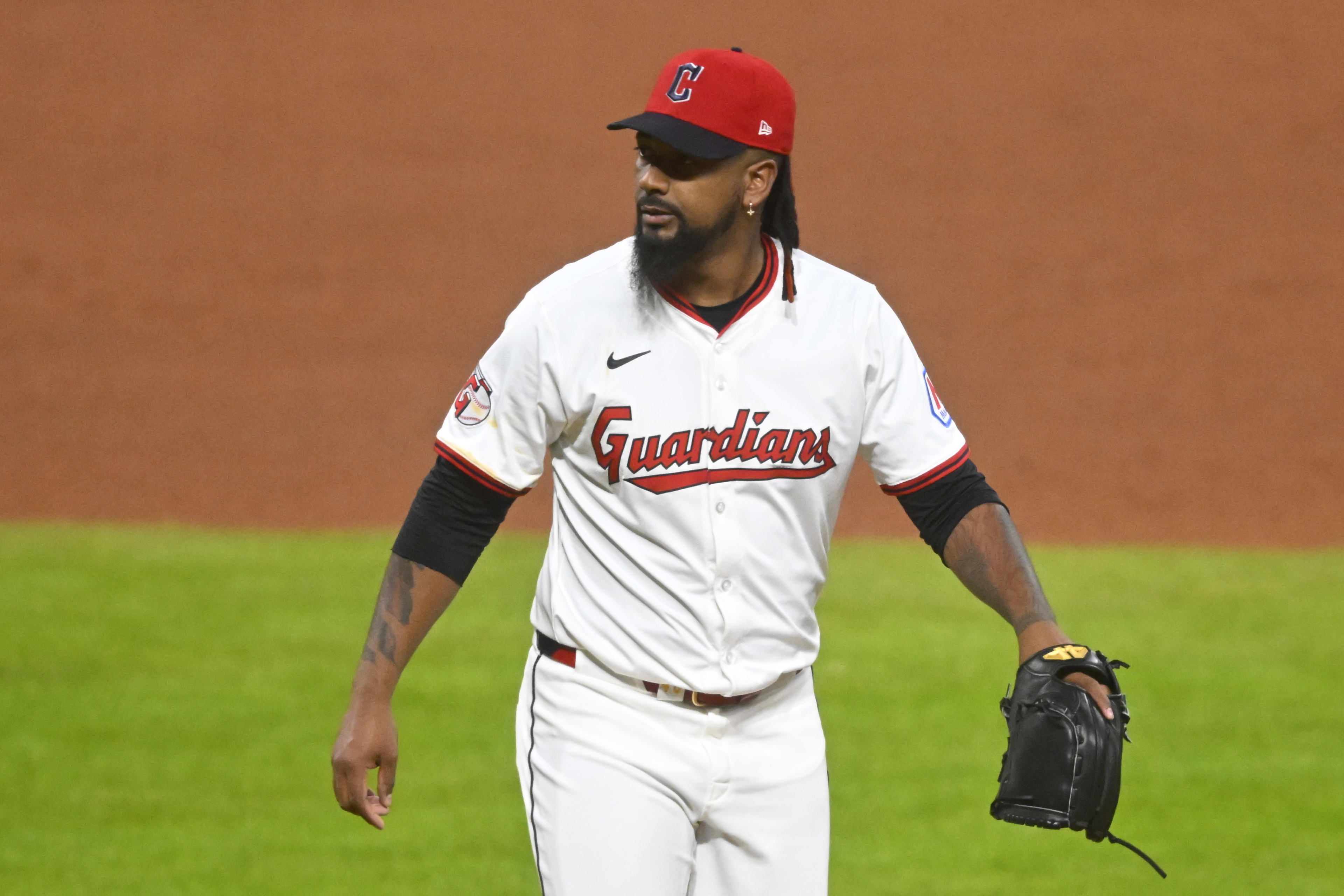
In just seven postseason appearances, Clase allowed eight earned runs, a staggering reversal for a pitcher who had made dominance look routine. Cleveland’s season unraveled in tandem.
The defining moment came in Game 3 of the American League Championship Series against the New York Yankees. With the Guardians clinging to postseason life, Clase gave up back-to-back home runs — after allowing only two home runs during the entire regular season.
The first came off a 99-mph cutter painted on the outside corner, crushed by Aaron Judge.
“I think there’s one person that could hit that pitch off Emmanuel Clase out of the yard, and he did,” manager Stephen Vogt said afterward. “As a baseball fan, it was really cool. As the opposing manager, it was not.”
That explanation made sense — until Giancarlo Stanton followed with another home run. Stanton, a long-standing Cleveland postseason nemesis, has now homered in eight of 12 playoff games against the Guardians.
One bad night on the biggest stage? That happens. Baseball is cruel and unpredictable.
But Clase’s postseason wasn’t just bad — it was historically out of character.
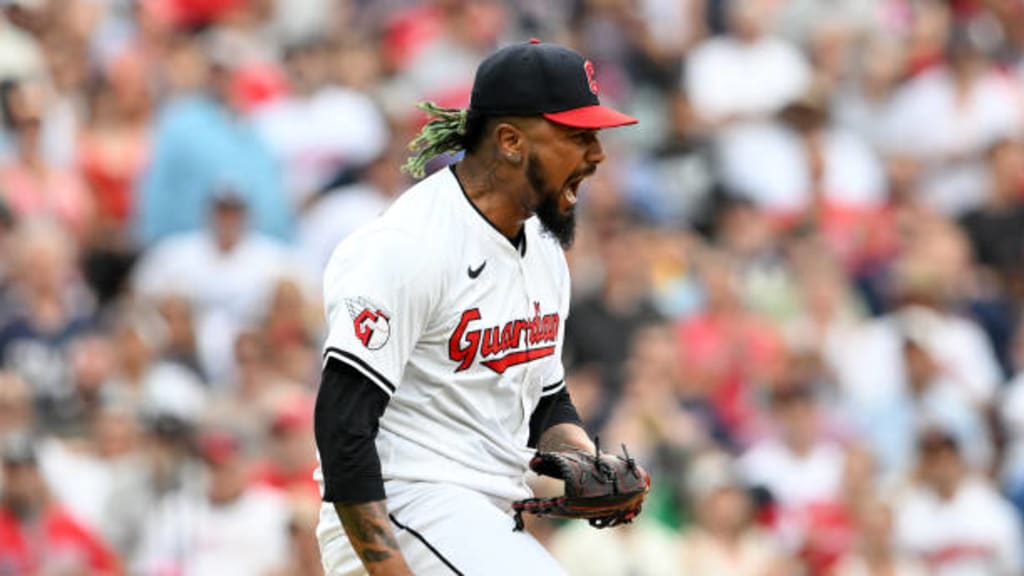
Advanced analysis using data from Baseball-Reference, cleveland.com, and The Plain Dealer shows that his struggles were not isolated to the Yankees. Even when compared to his regular-season performances against the American League’s top offenses, Clase was significantly worse in the postseason.
Fatigue? Unlikely. He appeared in 74 games during the regular season, marking the fourth straight year he pitched in 70-plus contests. More importantly, he was lights-out in September, allowing zero runs in 11 appearances entering the playoffs. There was no warning sign. No gradual decline.
Pitch-by-pitch breakdowns reveal that Clase did start postseason at-bats slightly worse than in September — but the drop-off accelerated rapidly from there. His command, sequencing, and effectiveness all deteriorated in ways the numbers alone struggle to fully explain.
Which brings the discussion to an uncomfortable place.
If Clase was tipping pitches — unintentionally revealing what was coming — why did opposing hitters identify it while Cleveland did not? And in light of the indictment, a darker question inevitably follows: is it possible those tells were intentional?
There is no public evidence tying Clase’s postseason collapse directly to gambling activity. None. Only Clase himself knows the truth.
But baseball has always been a sport obsessed with patterns, anomalies, and data. And when one of the most consistent pitchers in the game suddenly unravels under the brightest lights — at the same time federal authorities allege deliberate pitch manipulation — the overlap is impossible to ignore.
MLB’s new betting limits may prevent future scandals of this kind. But for the Guardians, for baseball, and for fans who watched October unfold in disbelief, the damage may already be done.
The pitches are capped. The questions are not.
Leave a Reply