It still feels surreal that Chase DeLauter’s first taste of Major League Baseball came in October, not April.
After missing the entire 2025 regular season due to a frustrating string of injuries, the Cleveland Guardians made one of the boldest decisions of the postseason when they activated DeLauter ahead of the American League Wild Card Series. With that move, DeLauter became just the sixth player in MLB history to make his debut in the playoffs — a stunning vote of confidence in a player who hadn’t appeared in a single big-league game.
The results were modest but telling. DeLauter went 1-for-6 across two postseason games, drew a walk, struck out once, and logged innings in both center and right field. The stat line didn’t jump off the page, but the moment mattered. Cleveland wasn’t just filling a roster spot — they were sending a message.
Now, following an offseason defined more by patience than splashy offensive additions, that message is becoming clearer. The Guardians appear ready to give DeLauter a legitimate opportunity to become an everyday outfielder in 2026. And for a franchise built on development and internal belief, that could be a turning point.
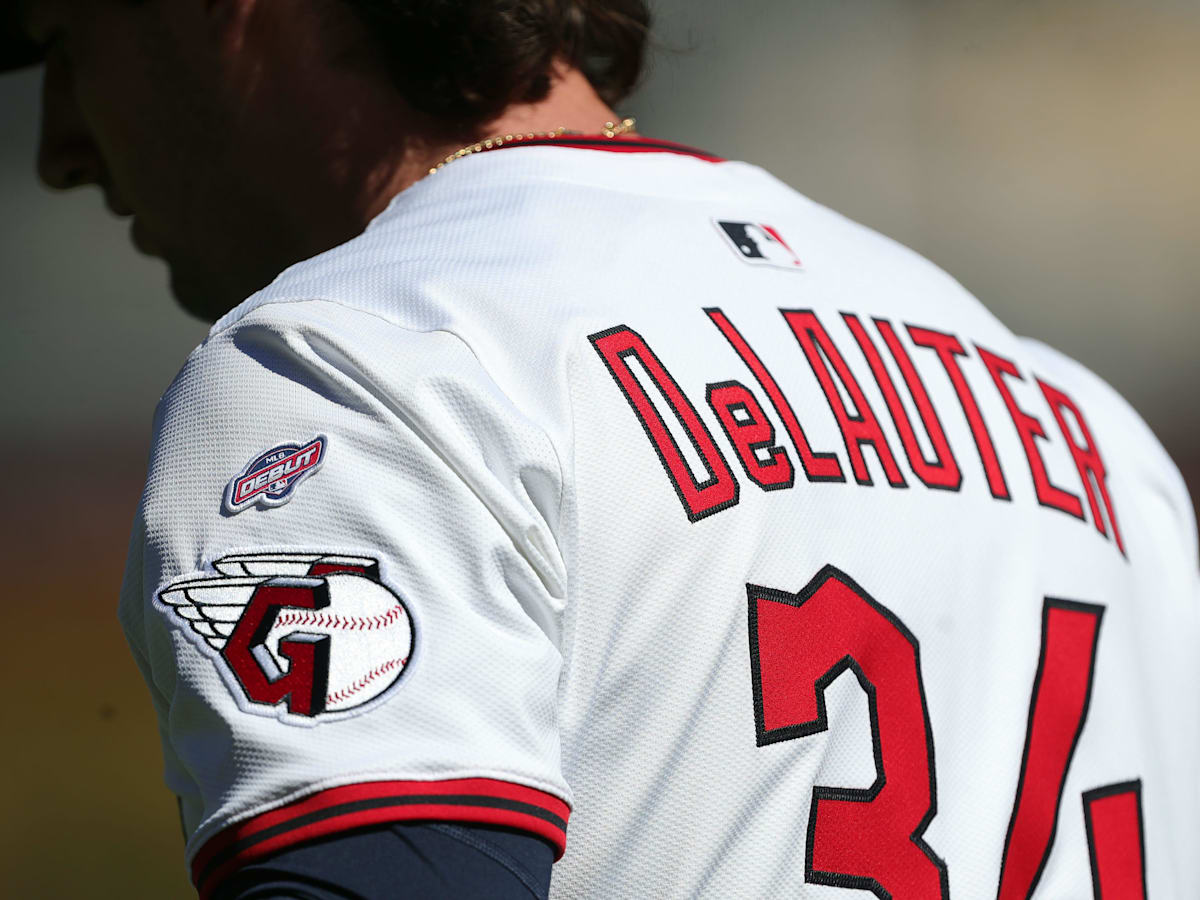
Last week, MLB.com’s Tim Stebbins reinforced that idea by naming DeLauter as the Guardians’ prospect to watch for 2026 — a label that carries weight given Cleveland’s notoriously conservative promotion philosophy.
Before his whirlwind call-up, DeLauter showed exactly why he has remained such a tantalizing talent. In 34 games at Triple-A, he slashed .278/.383/.476 with five home runs and 24 RBI. The approach was polished. The power was playable. The at-bats were competitive.
But as has been the theme of his professional career, his momentum was interrupted.
A sports hernia suffered during spring training required core muscle surgery, delaying his season until May. Even after he returned, the Guardians took a cautious approach, not allowing him to play four consecutive games until early July. Just as it appeared he was finally building rhythm, another setback arrived — right hamate surgery in late July to address wrist soreness.
At the time, the injury felt crushing. Many around the organization quietly assumed DeLauter’s MLB debut would be pushed to 2027. That assumption made Cleveland’s postseason decision all the more shocking.
DeLauter’s first three professional seasons have been defined by one harsh reality: availability. The talent has never been in question. Staying on the field has.
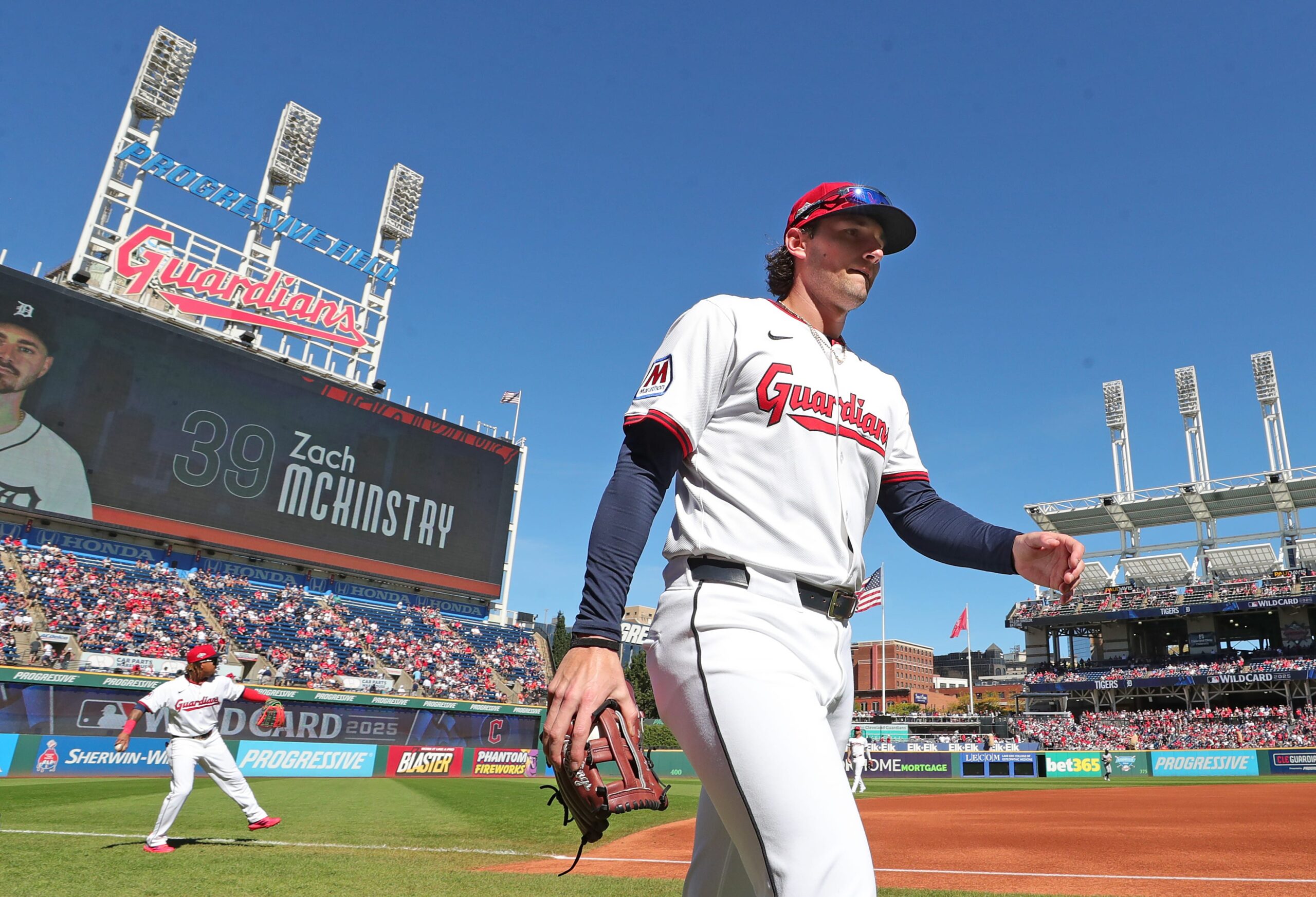
That’s why the Guardians’ aggressive decision to deploy him in October stands out as a tangible example of a possible philosophical shift. Rather than slow-playing him indefinitely, Cleveland chose to trust the player — and perhaps the process — in the highest-pressure environment imaginable.
That trust could pay dividends in 2026.
Steven Kwan is firmly entrenched in left field, but center and right field remain wide open. Those vacancies represent real opportunity, not theoretical playing time.
According to The Athletic’s Ken Rosenthal, the Guardians have explored adding outfield help this offseason — but only if those moves don’t block young players like DeLauter or George Valera. So far, the front office has stayed true to that stance.
Cleveland’s lone offensive addition has been Stuart Fairchild, signed to a minor league deal. Fairchild offers depth and flexibility, but he doesn’t alter the big picture. If anything, he profiles as a platoon partner rather than an obstacle.
That reality positions DeLauter to enter spring training with a legitimate chance to make the Opening Day roster. For a 24-year-old whose career has been repeatedly stalled by injury, that alone is significant.

Development is rarely linear, but there’s a sense that DeLauter is approaching a long-awaited inflection point. He has tasted postseason baseball. He has navigated adversity. He has earned the trust of a front office that rarely rushes prospects.
Most importantly, the Guardians are building a roster that can afford to let him grow at the major-league level.
There are still questions, of course. Health will always be the caveat. Consistency will need to follow opportunity. But for the first time in years, DeLauter’s path appears clear rather than cluttered.
For a franchise that thrives when internal bets pay off, committing to Chase DeLauter in 2026 isn’t just a roster decision — it’s a statement about the future.
And after everything he’s endured, the most compelling part may be this: the breakout no longer feels hypothetical — it feels imminent.
Leave a Reply