Several high-profile performances at the John F. Kennedy Center for the Performing Arts have been canceled after artists objected to the decision to add former President Donald Trump’s name to the iconic cultural venue. The cancellations have quickly drawn national attention, sparking a broader debate over the role of politics in publicly prominent arts institutions and the extent to which artists should use their platforms to take political or moral stands.
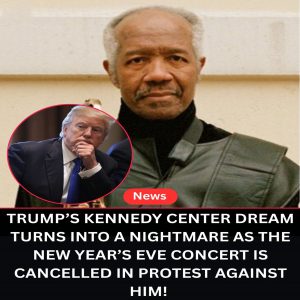
The most widely noted cancellation came from acclaimed jazz ensemble The Cookers, who announced they would no longer perform their planned New Year’s Eve concert at the Kennedy Center. In a statement shared publicly, saxophonist Billy Harper explained that the decision was rooted in principle rather than convenience. Harper said he could not, in good conscience, perform at a venue newly associated with values he personally opposes.
Harper referenced his decades-long involvement with musicians connected to civil rights, anti-racism, and social justice movements, noting that music has always been inseparable from moral conviction in his life. For him, the venue’s new naming decision crossed a line he could not ignore, even at the cost of a major performance opportunity.
Other artists soon followed. Singer Kristy Lee announced she would withdraw from her scheduled appearance, while the contemporary dance troupe Doug Varone and Dancers also canceled an upcoming performance. In an interview with The New York Times, Varone acknowledged that the decision carried serious financial consequences for his company, which relies heavily on touring revenue. Despite the losses, he said the choice reflected a moral obligation he felt compelled to honor.
“It wasn’t an easy decision,” Varone told the paper. “But it was one that aligned with our values and the identity of our work.”
According to reports, the growing number of cancellations has significantly reduced the Kennedy Center’s upcoming schedule. In the coming months, only one major production is currently listed, an unusual development for a venue that typically hosts a full slate of concerts, theater productions, dance performances, and educational programming.
The Kennedy Center, a national cultural landmark, has long occupied a unique position at the intersection of art, public funding, and civic symbolism. While it operates as a nonprofit organization, it also holds national prominence and receives federal support, making it especially sensitive to political and ideological disputes.
Supporters of the artists’ decisions argue that performers have the right—and in some cases the responsibility—to choose where they appear. They contend that art has always been intertwined with values and social commentary, and that asking artists to ignore political symbolism attached to venues amounts to silencing personal conscience.
“Artists are not neutral objects,” said one arts advocate. “Their work is shaped by their beliefs, histories, and lived experiences. Choosing not to perform somewhere is itself a form of expression.”
From this perspective, cancellations are seen not as acts of disruption, but as statements consistent with a long tradition of cultural resistance and ethical decision-making within the arts.
Critics, however, see the situation differently. They argue that national cultural institutions should remain politically neutral spaces where people of all viewpoints can gather to experience art. From this standpoint, tying performances—or the lack of them—to political disagreements risks turning cultural venues into ideological battlegrounds.
Some critics also warn that the cancellations could have unintended consequences. Reduced programming can affect not only audiences, but also staff members, technicians, ushers, and administrators whose livelihoods depend on a steady calendar of events. There are also concerns about long-term financial stability, as canceled performances can strain budgets and donor relationships.
“This isn’t just about the artists,” said one former arts administrator. “It’s about the ecosystem that supports live performance, much of which operates on very thin margins.”
The controversy raises deeper questions about symbolism and public space. Should the naming of a cultural institution be treated as a purely administrative decision, or does it carry ideological meaning that artists and audiences are entitled to respond to? And at what point does political expression risk overshadowing the cultural mission of such venues?
Observers note that this debate reflects broader national tensions, where institutions once considered neutral increasingly become symbols in larger political and cultural conflicts. From universities to libraries to museums, disputes over names, donors, and affiliations have become more common in recent years.
The Kennedy Center has not publicly commented in detail on the cancellations, though representatives have emphasized the institution’s commitment to artistic excellence and diverse programming. Whether additional artists will withdraw, or whether compromise or dialogue is possible, remains unclear.
For now, the situation underscores the fragile balance between art and politics in modern public life. Artists face pressure to stand by their values, institutions must navigate competing expectations, and audiences are left to grapple with the consequences of decisions made on both sides.
As the debate continues, one reality is clear: the question is no longer whether politics and art intersect, but how openly—and at what cost—that intersection is navigated. The unfolding events at the Kennedy Center serve as a powerful reminder that cultural spaces are not isolated from national conversations, but often stand at their very center.
Leave a Reply