Sen. Bernie Sanders has launched a blistering attack on President Donald Trump, accusing him of initiating what he called an “illegal, premeditated and unconstitutional war” in coordination with Israeli Prime Minister Benjamin Netanyahu. In a strongly worded public statement, Sanders warned that the United States is being pushed toward another devastating Middle East conflict—this time with Iran—without congressional approval.
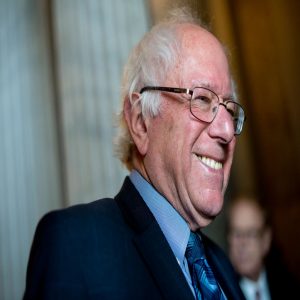
The Vermont senator argued that the president does not have the authority to unilaterally take the country into war. “The U.S. Constitution is clear,” Sanders said. “It is Congress that declares war, not a president acting alone.” He called for the Senate to reconvene immediately to vote on a pending War Powers Resolution aimed at limiting further military escalation. Sanders pledged his full support for the measure, framing it as a necessary step to restore constitutional order and prevent what he described as a reckless expansion of hostilities.
At the center of Sanders’ criticism is the claim that the military action against Iran violates both domestic law and international norms. He warned that attacking a sovereign nation without proper authorization undermines the rule-based international system and sets a dangerous precedent. “If the United States and Israel can launch an attack against a sovereign nation, so can any other country,” Sanders said, cautioning that such actions risk creating global instability. According to him, the consequences would not be abstract—they would be measured in lives lost, regional chaos, and long-term insecurity.
Sanders also accused Trump of aligning too closely with Netanyahu’s long-standing political ambitions regarding Iran. He suggested that the president is “gambling with American lives and treasure” to fulfill what he described as Netanyahu’s decades-long goal of drawing the United States into armed conflict with Tehran. While supporters of the administration argue that strong action is necessary to deter Iranian aggression, Sanders insisted that escalation would only inflame tensions and potentially ignite a broader regional war.
Drawing historical parallels, Sanders invoked past U.S. military interventions that remain deeply controversial. He pointed to the Vietnam War and the Iraq War as examples of conflicts that, in his view, were launched under misleading pretenses and cost enormous human and financial tolls. “The American people were lied to about Vietnam. The American people were lied to about Iraq,” Sanders said. “The American people are being lied to again today.” His remarks reflect a long-standing skepticism among many lawmakers and citizens about the intelligence and justifications used to support military interventions abroad.
For Sanders, the stakes extend beyond constitutional procedure or diplomatic norms. He emphasized the domestic impact of war, arguing that ordinary Americans would ultimately bear the burden. Military conflicts, he noted, divert resources away from pressing national needs such as healthcare, affordable housing, education, and job creation. “The people of our country, no matter what their political persuasion, do not want endless war,” he said. Instead, he argued, Americans want economic stability, decent-paying jobs, and opportunities for their children.
The senator’s comments come at a time of heightened tensions in the Middle East, with fears that even limited strikes could spiral into sustained confrontation. Critics of the administration worry that retaliatory actions by Iran or its regional allies could endanger U.S. troops and civilians, as well as destabilize already fragile areas. Supporters of the White House, however, contend that decisive action sends a necessary message of deterrence and protects American interests.
Sanders’ call for a War Powers Resolution is rooted in the 1973 War Powers Act, legislation intended to check presidential authority by requiring notification and, in many cases, approval from Congress before engaging in extended military operations. While presidents of both parties have often tested the boundaries of that law, efforts to assert congressional authority have gained renewed attention in recent years as lawmakers seek greater oversight over foreign interventions.
The debate now unfolding on Capitol Hill reflects broader divisions about America’s role in the world. Some lawmakers argue that a firm stance against Iran is essential to national security and to protecting key allies in the region. Others, like Sanders, maintain that military escalation risks repeating the mistakes of the past and entangling the nation in another costly and prolonged conflict.
Public opinion may play a decisive role. Polls in recent years have shown widespread fatigue with “forever wars,” particularly after two decades of military involvement in Afghanistan and Iraq. Sanders’ message appears aimed at tapping into that sentiment, positioning himself as a voice against what he calls another “senseless war.”
As Congress weighs its options, the central question remains whether lawmakers will assert their constitutional authority or allow the executive branch to continue directing the course of events. For Sanders, the answer is urgent and clear. “We must not allow Trump to force us into another senseless war,” he said, ending his statement with a blunt demand: “No war with Iran.”
Whether that rallying cry gains traction among fellow senators—and with the American public—could determine the next chapter in a rapidly escalating geopolitical crisis.
Leave a Reply