Sen. Bernie Sanders is renewing his push for a wealth tax on America’s richest individuals, arguing that the widening gap between billionaires and working families has reached a breaking point.
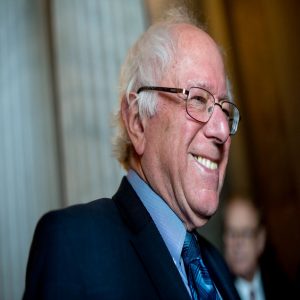
In a recent social media post, Sanders highlighted what he described as stark economic inequality in the United States. “While U.S. billionaires became $1.5 trillion richer last year, the average worker in America has just $955 in retirement savings & 21% of seniors are trying to survive on less than $15,000 a year,” he wrote. “That’s why I’ll be in LA this week fighting for a wealth tax on billionaires.”
The message reflects a long-standing theme of Sanders’ political career: challenging wealth concentration at the top and advocating for policies aimed at strengthening economic security for working- and middle-class Americans. The independent senator from Vermont, who caucuses with Democrats, has repeatedly proposed taxes on extreme wealth as a means of funding social programs and reducing inequality.
Sanders’ latest remarks come amid ongoing debates over retirement security and the financial stability of older Americans. According to various economic studies, a significant number of U.S. workers approach retirement with limited savings. Rising housing costs, healthcare expenses, and inflation have further strained fixed incomes, especially among seniors who rely primarily on Social Security benefits.
At the same time, wealth accumulation at the top of the income ladder has accelerated. Billionaires’ net worth often fluctuates based on stock market performance, asset valuations, and business growth. Sanders argues that the scale of those gains — which he said amounted to $1.5 trillion in a single year — underscores the need for structural reform.
His proposed wealth tax would target individuals with net worth above a certain threshold, typically in the tens of millions or billions of dollars. While specific legislative language varies from proposal to proposal, Sanders has previously outlined plans that would impose an annual percentage tax on ultra-high-net-worth individuals.
Supporters of the policy argue that such a tax could generate significant federal revenue. They contend that the funds could be used to expand Social Security benefits, lower prescription drug costs, invest in affordable housing, or strengthen Medicare. Advocates also maintain that a wealth tax would help rebalance what they see as an increasingly unequal economic system.
Critics, however, question both the practicality and the legality of a federal wealth tax. Some legal scholars argue that taxing net worth rather than income could face constitutional challenges. Others warn that such a policy might discourage investment, encourage capital flight, or prove difficult to enforce due to the complexities of valuing assets like private businesses, art collections, and real estate.
Despite those concerns, Sanders has remained steadfast. Throughout his presidential campaigns and Senate tenure, he has framed wealth inequality as a moral and economic crisis. He frequently contrasts the fortunes of billionaires with the financial struggles of ordinary Americans, particularly seniors living on modest incomes.
Los Angeles, where Sanders said he would travel to advocate for the proposal, has become a symbolic backdrop for debates over wealth disparity. The city is home to both immense affluence and visible poverty, with high housing prices and a significant unhoused population existing alongside some of the wealthiest neighborhoods in the country.
The broader political landscape remains divided on the issue. While progressive lawmakers have expressed support for taxing extreme wealth, moderate Democrats and most Republicans have opposed the idea. Congressional gridlock has made sweeping tax reforms difficult to enact, especially in closely divided chambers.
Nonetheless, Sanders’ messaging resonates with many voters who feel left behind by economic growth that appears concentrated at the top. Polling in recent years has shown mixed but notable public support for higher taxes on billionaires, particularly when framed as funding healthcare or retirement security programs.
The debate also intersects with concerns about the long-term stability of Social Security. Projections indicate that without legislative action, the program’s trust fund reserves could face shortfalls in the coming years. Sanders and other advocates argue that additional revenue from taxing extreme wealth could help shore up the system and ensure full benefits for future retirees.
Opponents counter that structural reforms to entitlement programs, spending adjustments, or broader tax changes may be more effective than targeting a small number of ultra-wealthy individuals. They caution against policies that could face protracted court battles or implementation challenges.
Still, Sanders’ statement reflects a broader shift in political discourse over the past decade. Discussions about wealth concentration, corporate power, and economic fairness have moved from the margins into mainstream debate. The pandemic, stock market volatility, and rising living costs have intensified scrutiny of disparities in income and net worth.
For Sanders, the issue is personal as well as political. He has long argued that democracy itself is threatened when economic power becomes too concentrated. In speeches and legislative proposals, he frequently ties economic reform to broader themes of accountability and fairness.
As he heads to Los Angeles to promote his wealth tax proposal, the Vermont senator appears determined to keep the conversation focused on economic inequality. Whether his plan gains traction in Congress remains uncertain, but the underlying debate shows no signs of fading.
The contrast Sanders highlighted — soaring billionaire wealth alongside modest retirement savings and struggling seniors — encapsulates a central tension in American economic life. How policymakers address that tension may shape fiscal debates for years to come.
Leave a Reply