U.S. Sen. Bernie Sanders (I-Vt.) is applauding a major breakthrough in New York’s health care labor dispute, congratulating more than 10,000 members of the New York State Nurses Association (NYSNA) after they secured a strong tentative agreement with hospital management. In a post on X, Sanders hailed the nurses’ persistence and called on NewYork-Presbyterian and other hospital systems to finalize a fair contract that prioritizes patient safety and staff well-being over corporate profit margins.
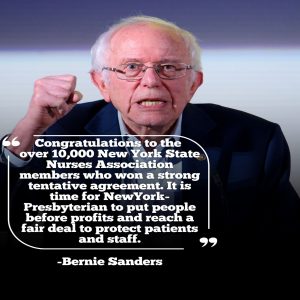
Sanders’ remarks came shortly after reports confirmed that health care workers and hospital officials reached a tentative agreement at several major New York City hospitals, effectively ending a high-profile nursing strike that lasted roughly a month. The strike, one of the most significant labor actions in the city’s health care sector in recent years, drew national attention and intensified debate over staffing levels, burnout, and the future of hospital labor relations.
“Congratulations to over 10,000 nurses who stood together and won a strong tentative agreement,” Sanders wrote. “Now it’s time for hospital executives to put people before profits and finalize a deal that protects both patients and workers.”
The strike began after negotiations between NYSNA and hospital management stalled over key issues, including nurse-to-patient ratios, wages, benefits, and working conditions. Nurses argued that chronic understaffing had reached a breaking point, compromising patient care and pushing exhausted staff out of the profession. Hospital leaders, meanwhile, cited financial pressures, rising operational costs, and post-pandemic challenges as constraints on their ability to meet union demands.
As picket lines formed outside hospitals across the city, nurses described grueling shifts, missed breaks, and unsafe patient loads. Many said the strike was not just about pay, but about restoring dignity to their profession and ensuring that patients receive the attention and care they deserve. Public support for the nurses grew steadily, with community members, labor groups, and progressive lawmakers joining rallies and voicing solidarity.
The tentative agreement, while not yet fully detailed publicly, is widely described by union leaders as a meaningful step forward. NYSNA representatives have indicated that the deal includes improvements to staffing commitments, compensation, and workplace protections—core demands that nurses argued were essential to stabilizing the workforce and improving patient outcomes. The agreement must still be ratified by union members before it becomes final.
For Sanders, the outcome fits squarely within his long-standing advocacy for workers’ rights and his criticism of what he calls excessive corporate influence in health care. He has repeatedly argued that hospitals should be run as patient-centered institutions rather than profit-driven enterprises, especially as executives earn high salaries while frontline workers struggle with burnout and staffing shortages.
“This fight was never just about New York,” said one labor analyst. “It became a national symbol of what’s happening in health care everywhere—nurses stretched thin, patients at risk, and workers forced to strike to be heard.”
Hospital administrators have responded cautiously, welcoming the tentative agreement as a path toward stability while emphasizing the need to maintain financial sustainability. In statements released after the deal was announced, several hospital systems said they were committed to rebuilding trust with staff and ensuring uninterrupted patient care moving forward.
The strike’s end brings relief to patients who experienced disruptions during the labor action, as well as to hospitals that relied on temporary staffing to keep operations running. However, the broader issues raised by the dispute—staffing shortages, nurse retention, and the rising cost of care—remain unresolved across much of the country.
Health policy experts say the New York strike could have ripple effects nationwide. As hospitals in other states face similar staffing challenges, the success of NYSNA’s action may embolden nurses and other health care workers to push harder for improved conditions. Some analysts believe it could also influence upcoming contract negotiations and shape legislative debates around mandated staffing ratios and labor protections.
Sanders’ involvement underscores how closely labor struggles in health care are now intertwined with national politics. Progressive lawmakers increasingly frame these disputes as moral questions about priorities in one of the country’s most essential industries. “If we can’t ensure safe staffing and fair treatment for the people who care for us when we’re sick,” Sanders has argued in past remarks, “then our system is fundamentally broken.”
As nurses prepare to vote on the tentative agreement, union leaders are urging members to review the details carefully and consider the progress made through collective action. For many, the strike has already reshaped how they see their role—not just as caregivers, but as advocates for systemic change.
Whether the agreement is ultimately ratified or not, the message from New York is clear: organized health care workers can force powerful institutions to the negotiating table. And with figures like Bernie Sanders amplifying their cause, the fight over how America values its nurses—and its patients—is far from over.
Leave a Reply