Will Brennan, once viewed as a promising outfield depth piece and occasional everyday bat for Cleveland, saw his 2025 campaign derailed. He underwent elbow surgery (a UCL repair “Tommy John”–type procedure) midseason and later required sports‑hernia surgery before the year ended.
Because of these injuries and limited playing time, his 2025 season provided little clarity on his ability to rebound. Combined with a roster crowded with younger outfielders and roster‑construction constraints, the club decided to non‑tender Brennan, making him an unrestricted free agent.
Even before the non‑tender, Brennan’s spot was tenuous: though recalled earlier in 2025 when the team optioned another player, his major‑league production had never exploded — over parts of multiple seasons he carried roughly a .267/.307/.373 slash line with modest power numbers.
Given his injury history and the Guardians’ shifting focus to younger, controllable talent, many expected Brennan’s tenure in Cleveland might be over.
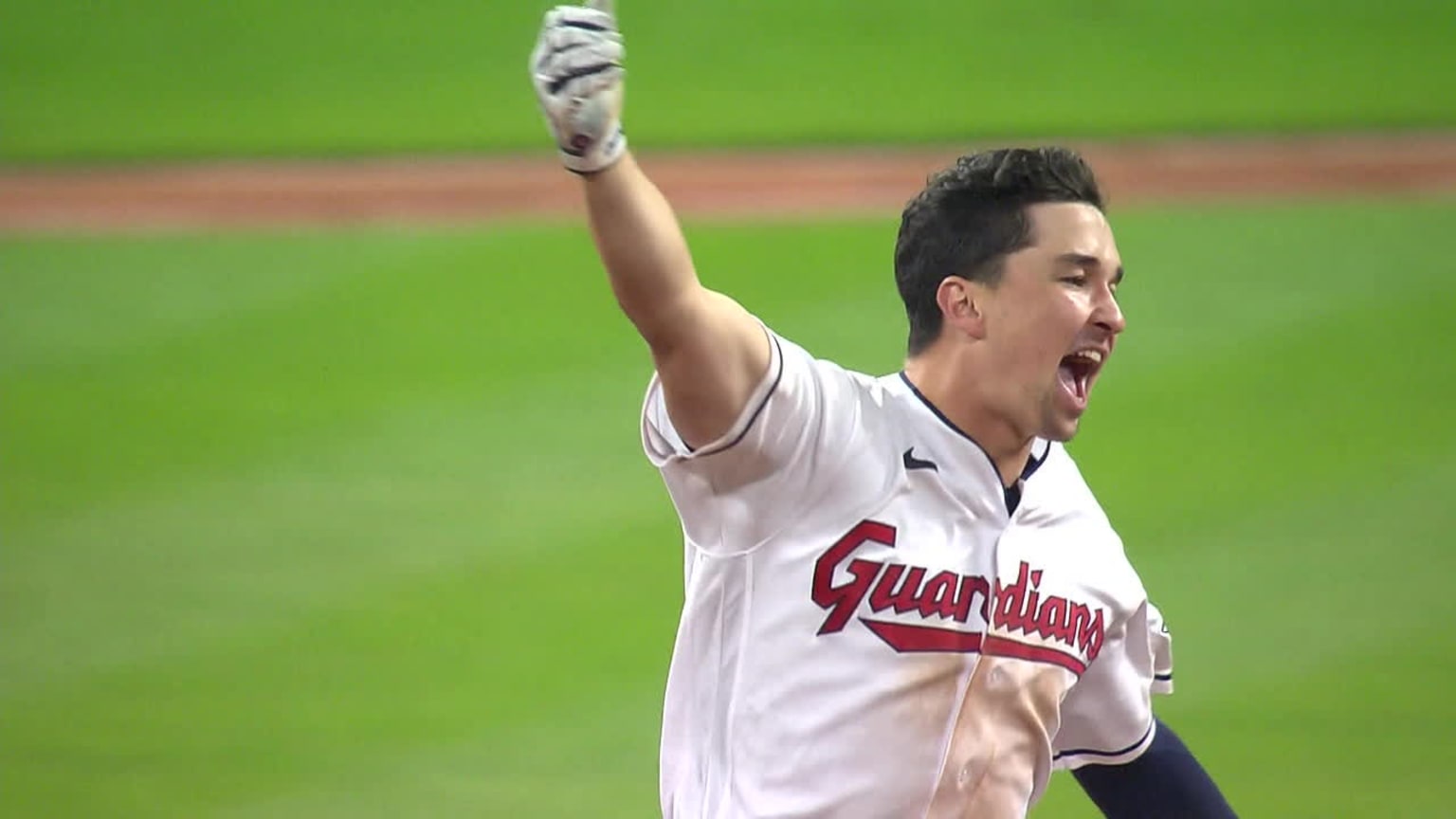
Still, a growing contingent of analysts and observers argue that completely cutting ties might be premature. The argument centers on one main principle: bring him back — but on a minor‑league deal only. Here’s why that approach could work for both sides:
-
Affordable depth, minimal risk: A minor‑league contract doesn’t commit significant payroll or 40‑man roster space. If Brennan regains form, he becomes a low-cost depth outfielder. If not, Cleveland can cut ties with minimal consequence.
-
Insurance for a shaky outfield corps: The Guardians’ outfield depth remains uncertain. With injuries, inconsistent performance, and a mix of young and unproven players, having someone like Brennan — someone with MLB experience — in the system provides insurance.
-
Potential upside if healthy: Pre‑injury, Brennan showed hints of offensive capability, especially as a left-handed contact bat. If fully recovered, he could still contribute as a platoon bat, pinch hitter, or fourth/fifth outfielder.
-
Flexibility and roster management: A minor‑league deal allows the club to maintain control and flexibility: they can monitor his health through spring training and then decide whether to add him to the major-league roster based on performance — without rushed commitments.
Analysts who advocate a reunion stipulate this condition: the contract must be minor‑league only. In other words, any agreement should avoid guaranteed big-league salary or roster spot.
Beyond contract structure, what matters now:
-
Brennan’s health: He must demonstrate full recovery from elbow and hernia surgeries before 2026 begins — ideally through spring training. If he’s still limited or rehabbing, the deal loses merit.
-
Option flexibility: The deal should include minor-league options or clear escape clauses, allowing the Guardians to send him down if performance or health falter — maintaining roster flexibility.
-
Clear defined role: Rather than expecting a full-time job, Brennan’s role should be as depth: platoon situations, pinch hitting, spot starts — not everyday expectations.
-
Budget and roster constraints: Given limited resources, re‑signing Brennan in this way should not block other roster moves.

For the Guardians, re‑signing Brennan under a minor‑league deal would represent a low-risk, high-reward strategy. It preserves depth and flexibility, hedges against potential outfield injuries or underperformance, and gives a former major‑leaguer one more chance to prove himself.
Given the combination of roster turnover, injury concerns, and a priority on cost‑controlled talent, this seems like a pragmatic and potentially smart move for Cleveland — as long as the “minor‑league only” condition is respected.
On the flip side, if Brennan can’t bounce back physically, he remains a sunk cost, and the plan offers little downside.
In a season where every roster spot and dollar counts, this measured approach could amount to solid insurance for the Guardians — a buffer that might not make headlines, but could prove valuable over a long, unpredictable 162‑game grind.
Leave a Reply