The Mariners’ interest in Ferrer stretches back several seasons. Jerry Dipoto, Seattle’s president of baseball operations, confirmed that Ferrer was their “No. 1 trade target.” Previous trade discussions with Washington over the past few years had failed to materialize, but this offseason the pieces finally aligned.
Seattle’s bullpen had shown promise but remained thin, particularly against left-handed hitters in high-leverage situations. Ferrer’s combination of a high-velocity fastball, strong ground-ball rate, and elite strike-throwing ability made him an ideal fit for the Mariners’ needs. The trade represents a strategic move to reinforce one of baseball’s most critical units in the pursuit of a postseason run.
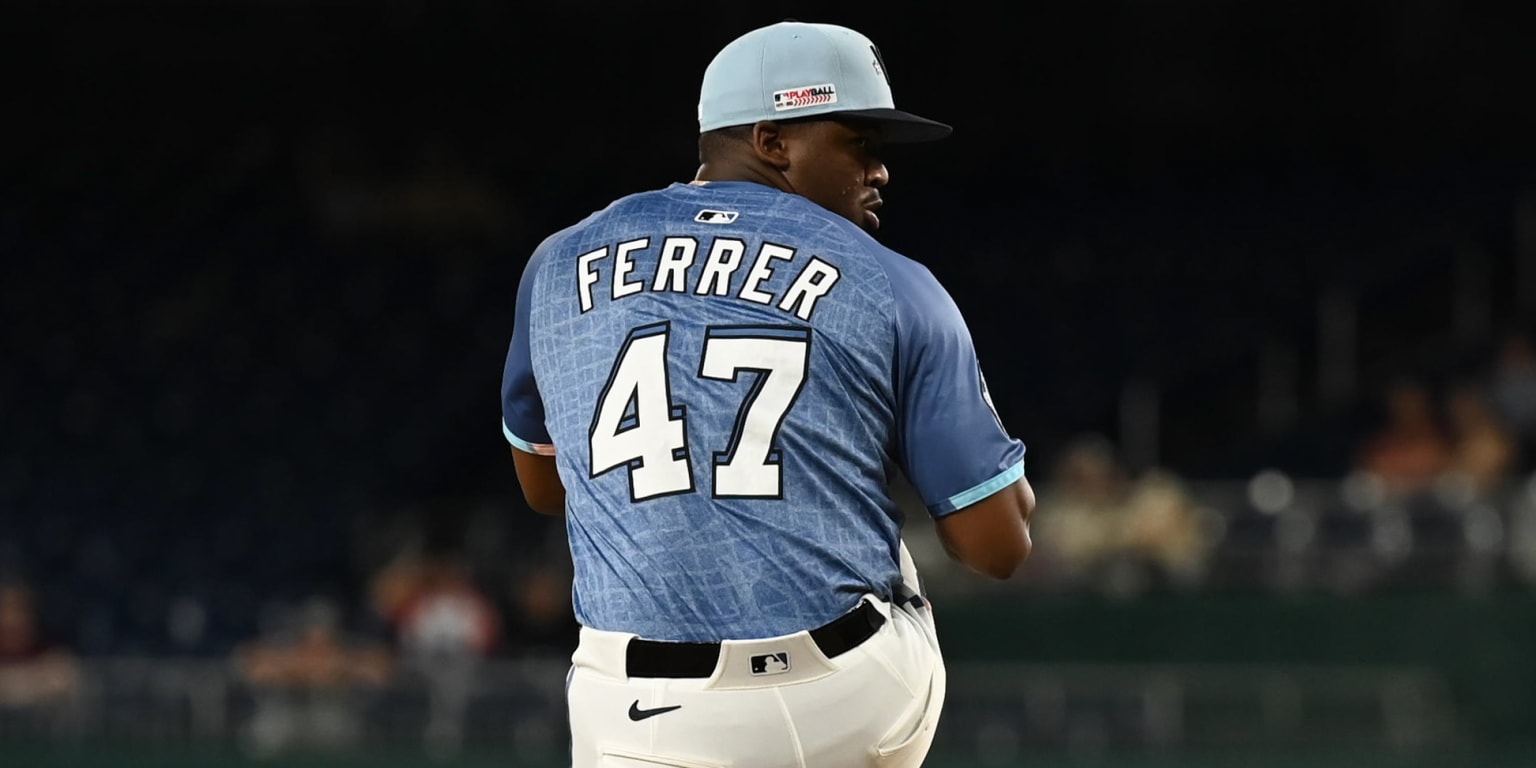
José A. Ferrer, 25, posted a 4.48 ERA over 72 relief appearances in 2025 with Washington. While his ERA is modest, his underlying metrics suggest significant upside. He averaged nearly 98 mph on his fastball, demonstrated elite walk control, and induced ground balls at an exceptional rate. Against left-handed hitters last season, he held opponents to a .186 batting average, striking out 26 and issuing only two walks.
With four years of team control remaining, Ferrer provides Seattle with both immediate impact and long-term bullpen stability. Paired with veterans like Gabe Speier and emerging arms such as Matt Brash and Carlos Vargas, Ferrer enhances Seattle’s late-inning versatility, allowing the team to deploy matchups strategically and maintain consistent performance across games.
To acquire Ferrer, the Mariners traded Harry Ford and right-handed pitching prospect Isaac Lyon. Ford, a former first-round pick, had been a top catching prospect for Seattle, posting a .283 batting average with 16 home runs and 74 RBIs at Triple-A Tacoma in 2025. He also made his MLB debut in September but was limited behind established catcher Cal Raleigh.
Lyon, a 2025 10th-round pick, had a challenging first professional season, recording a 7.30 ERA in Low-A ball. The Mariners deemed the cost acceptable, prioritizing immediate bullpen strength over the long-term upside of Ford and the developmental potential of Lyon. This move emphasizes Seattle’s “win-now” philosophy, particularly in a competitive AL West environment.
While Ferrer adds proven talent to Seattle’s bullpen, trading a top prospect carries inherent risk. Ford’s potential as a long-term catcher could surpass the value of a mid-level reliever if Ferrer underperforms or faces injuries. Additionally, the Mariners’ catching depth is now thinner beyond Cal Raleigh, potentially requiring a veteran backup or further development from minor-league players.
Relievers are notoriously volatile, and success is not guaranteed. Ferrer’s performance under high-pressure playoff situations will be crucial to determine if the trade achieves its intended impact.

For Mariners fans, this trade signals the organization’s commitment to contending in 2026. By addressing a critical bullpen weakness, Seattle enhances its chances in close games and playoff scenarios. Ferrer’s presence allows the team to manage innings more effectively, optimize lefty-righty matchups, and stabilize late-inning relief — key factors for success in a demanding American League West.
The trade also reflects a balance between present competitiveness and future planning. While Seattle sacrificed a top prospect, they gain a controllable, high-upside reliever who can contribute immediately and remain under team control for several seasons.
The acquisition of José A. Ferrer marks a milestone for the Seattle Mariners. Years of pursuit and multiple trade attempts culminated in landing a left-handed reliever capable of anchoring the bullpen. In exchange for Harry Ford and Isaac Lyon, Seattle strengthens its pitching depth while signaling a clear commitment to contending in 2026. The success of this trade will depend on Ferrer’s ability to deliver in high-pressure situations, but the Mariners have taken a decisive step toward immediate competitiveness.
Leave a Reply