House Minority Leader Hakeem Jeffries ignited a fierce online debate this week after declaring that “the Democratic Party is back,” following Democratic victories in recent elections in Virginia, New Jersey, and New York City. The statement, posted on X (formerly Twitter), was intended to project momentum and confidence. Instead, it triggered a wave of criticism from commentators, analysts, and everyday users who accused Jeffries of overstating victories in states long considered Democratic strongholds.
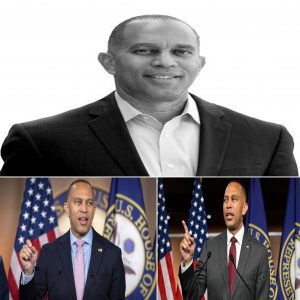
In his post, Jeffries wrote that Democrats were “defeating Donald Trump and extreme MAGA Republicans all across the country,” framing the recent results as evidence of a national political shift. The message quickly gained traction, surpassing 837,000 views within hours. But as its reach expanded, so did the backlash.
Many critics argued that winning in Virginia, New Jersey, and New York does not signal a Democratic resurgence, but rather confirms existing political realities. “You won in states that have been blue for years,” one widely shared reply read. “When Democrats win Florida or Texas, then you can say the party is back.”
The criticism struck at a familiar fault line in American politics: the difference between symbolic victories and meaningful shifts in the national map. While Democratic leaders highlighted turnout and margins as signs of strength, skeptics dismissed the wins as predictable outcomes in areas where Republicans have struggled for decades.
Political activist Xi Van Fleet took the critique further, arguing that the Democratic Party’s direction, not its electoral map, was the real issue. “The Democrats are ‘back,’” she wrote, “but more radical and more Marxist than ever.” Her comment echoed a broader conservative narrative that Democratic victories reflect ideological entrenchment rather than broad appeal.
Political analyst Ryan X. Jackson offered a sharper analogy that quickly went viral. “Republicans can’t win New Jersey or Virginia, and definitely not New York,” he wrote. “Celebrating victories there is like an NFL team bragging about beating a high school squad.” The comparison captured the tone of much of the online response—dismissive, sarcastic, and openly skeptical of Jeffries’ framing.
Other comments focused on demographic and economic trends rather than ideology. Some users argued that Democratic dominance in these states is partly the result of Republicans leaving high-cost, high-tax regions altogether. “Winning in blue states isn’t an achievement,” one post read. “It just shows conservatives have moved out because of the cost of living.” Another added, “Don’t mistake winning New York for a comeback—that’s political illusion.”
Even some moderate observers suggested that Jeffries’ message may have been aimed less at persuading undecided voters and more at energizing the Democratic base. In that context, the declaration that “Democrats are back” can be seen as a rallying cry rather than a data-driven assessment of national momentum.
Still, the mockery underscored a deeper challenge for Democrats as they look ahead to future national elections. While holding or expanding power in reliably blue areas is necessary for party cohesion, it does little to answer questions about competitiveness in battleground or Republican-leaning states. Critics argue that without breakthroughs in places like Florida, Texas, or Ohio, claims of a national comeback ring hollow.
Some responses turned the moment into outright satire. “If Democrats are ‘back,’” one user joked, “has the government reopened yet?” The comment reflected frustration among voters who see partisan messaging as disconnected from everyday concerns like government shutdowns, inflation, and public services.
From the Republican perspective, the reaction to Jeffries’ post was unsurprising. Allies of former President Donald Trump were quick to argue that Democratic wins in blue states do not threaten Republican control at the federal level. Several commentators emphasized that Trump continues to dominate national polling within the GOP and retains strong influence over economic, border, and national security debates.
One White House–aligned adviser, speaking anonymously, dismissed the Democratic celebration outright. “Winning in blue states doesn’t mean the country is changing direction,” the adviser said. “Most Americans still support President Trump’s policies on the economy, border security, and law and order. Democrats are confusing local victories with national reality.”
Political analysts largely agree that the truth lies somewhere in between. On one hand, Democrats successfully defended and expanded power in key states, maintaining control in regions critical to fundraising, media influence, and policy experimentation. On the other hand, those victories do not necessarily indicate a collapse of Republican strength elsewhere or a decisive shift in national sentiment.
Virginia and New Jersey, while not as deeply blue as New York, have leaned Democratic in recent cycles, particularly in suburban areas. New York City, meanwhile, remains one of the most Democratic jurisdictions in the country. Winning there reinforces Democratic dominance but does little to test the party’s appeal beyond its traditional base.
Jeffries himself has not directly responded to the online backlash, but allies suggest his message was meant to project confidence and unity at a time when Democrats face internal debates over strategy, messaging, and leadership. As House Minority Leader, Jeffries must balance motivating his base with presenting Democrats as a viable national alternative.
The episode highlights a broader reality of modern politics: social media declarations are no longer just messaging tools, but flashpoints that invite instant judgment. A single sentence can be reframed, mocked, or weaponized within minutes, often shaping public perception more powerfully than policy details or long-term trends.
As the political cycle accelerates, Democrats and Republicans alike are likely to continue battling not just at the ballot box, but in the arena of narrative control. For now, Jeffries’ declaration that “the Democratic Party is back” has achieved one thing beyond doubt—it has reignited a debate over what winning really means in an era of deeply entrenched political geography, and whether symbolic victories are enough to claim a national comeback.
Leave a Reply