In the lead‑up to the 2026 Florida gubernatorial election, a simmering controversy has erupted around communications between senior aides in Ron DeSantis’ political network and Republican candidate James Fishback — a businessman‑turned‑political contender whose hard‑line rhetoric has drawn both attention and criticism.
Although DeSantis’ team has officially denied sponsorship or endorsement of Fishback’s campaign, multiple reports indicate that at least two senior DeSantis aides have been in contact with the controversial candidate, raising questions about behind‑the‑scenes influence in the Republican primary.Fishback, the CEO of an investment firm, has recently launched his bid for Florida governor and is positioning himself as a candidate who will “build on” DeSantis’ conservative record and carry forward an aggressive agenda centered on traditional GOP priorities.
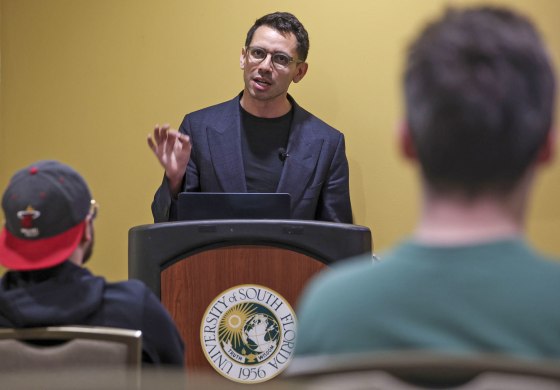
James Fishback is not a typical Republican politician. Prior to his 2025 campaign launch, Fishback was known mainly as a business leader and “America First” voice, urging moves like a hard‑line stance against H‑1B visas and strong immigration enforcement — positions that appeal to a segment of conservative voters but have alarmed others.
In the crowded GOP primary field, Fishback stands alongside more established figures, such as U.S. Rep. Byron Donalds — who is backed by former President Donald Trump — and Paul Renner, former Florida House Speaker.
What makes Fishback’s campaign especially intriguing — and controversial — isn’t just his policy positions but the possible behind‑the‑scenes connections to DeSantis’ inner circle, which could signal strategic maneuvering within the party.
DeSantis — who is term‑limited and cannot run for re‑election in 2026 — has been a dominant force in Florida Republican politics for years. His policies on immigration, education, and regulatory reform have reshaped the state’s political landscape and made Florida a conservative stronghold.
But as he prepares to exit the governor’s office, the question of who will inherit his political mantle has become contentious. Traditional wisdom suggested that figures like Byron Donalds — with Trump’s endorsement — could succeed him. Yet contact between DeSantis’ aides and Fishback has fueled speculation that the former governor’s camp might be quietly exploring alternative successors.
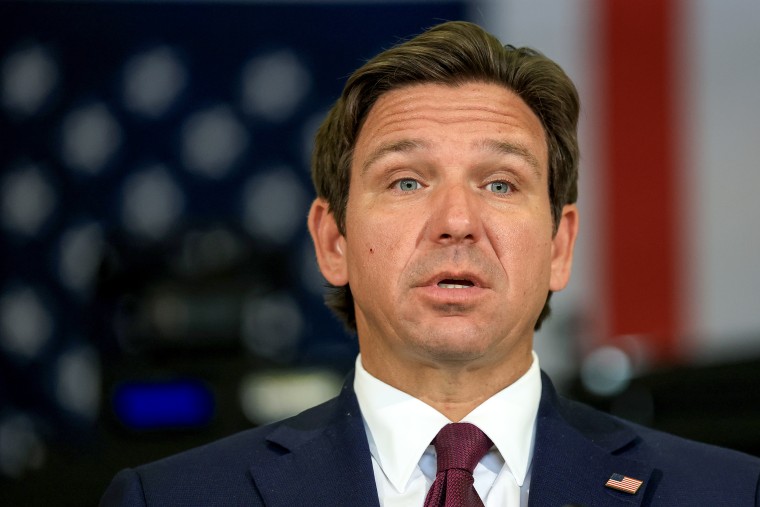
Official spokespeople for DeSantis have denied any formal support for Fishback’s campaign, insisting that the governor has not endorsed any candidate in the race. Despite this, the aides’ communications with Fishback — even if informal — have led to intense debate about whether DeSantis is orchestrating a more subtle power play to influence the primary outcome.
The Republican primary for Florida governor in 2026 is shaping up to be one of the most contested races in recent memory. Trump‑aligned candidates like Byron Donalds have a high profile and substantial national attention, while others seek to appeal to more traditional conservative voters.
Fishback’s presence in the field — amplified by his controversial stances and now the reported contacts with DeSantis aides — highlights fractures within the GOP’s Florida establishment. Some Republicans view Fishback as a true extension of DeSantis’ policy legacy, while others dismiss him as a fringe contender whose hardline rhetoric could alienate moderate voters.
This internal jockeying has broader implications: Florida remains pivotal to national politics, and the governor’s race often sets the tone for national party strategy in presidential election years. A divided or unpredictable GOP primary could open doors for Democrats or reshape conservative electoral alliances.
Florida’s 2026 gubernatorial election is more than just a state race — it’s a political bellwether. With Florida projected to hold a substantial portion of the nation’s electoral influence and demographic shifts continuing to reshape its electorate, control of the governor’s mansion carries outsize weight.
Moreover, the rumored ties between DeSantis aides and Fishback raise questions about how political influence is exerted in modern GOP contests — not always through official endorsements, but via networks of advisers, operatives and informal channels. The episode has already drawn scrutiny from political commentators and rival campaigns alike.
Democrats, eager to exploit any GOP infighting, have amplified the controversy, suggesting that behind‑the‑scenes maneuvering undercuts transparency and favors insiders over average Floridian voters. They argue that the Republican Party’s internal tensions — illustrative of broader factional divides — could be politically costly in both state and national contests.
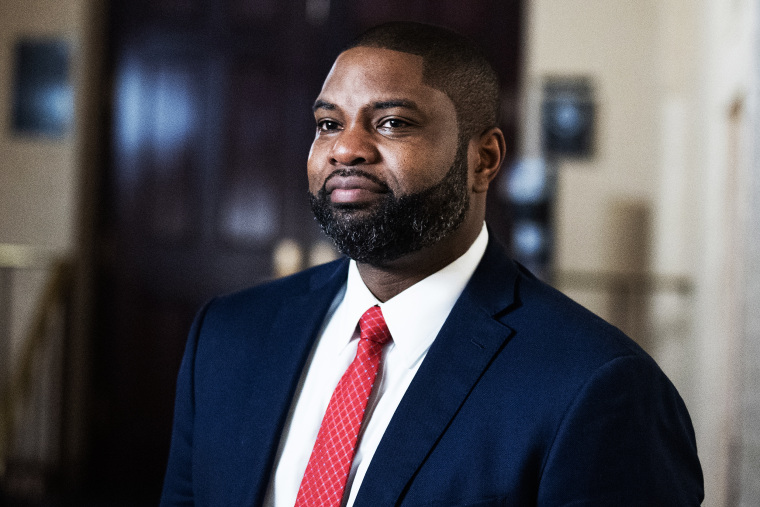
As the 2026 election cycle heats up, James Fishback’s campaign — and his unexpected connections to DeSantis’ team — will remain under intense scrutiny. Whether these contacts were casual strategic conversations or the beginnings of a coordinated political alignment is still unclear.
What is clear is that suspected ties between DeSantis’ aides and Fishback have ignited political speculation, raised questions about loyalty and influence within the GOP, and underscored how complex and unpredictable modern primaries can be — especially in a state as consequential as Florida.
In a contest shaped by fierce personalities, shifting alliances, and high‑stakes power struggles, the next chapter of Florida politics promises to be as intense as any national battleground. The GOP’s internal drama — far from being just a local story — could ripple outward and reshape conservative strategy in the 2026 election cycle and beyond.
Leave a Reply