Minnesota Representative Ilhan Omar sharply criticized President Donald Trump over recent comments she described as “disgusting,” accusing him of having an “unhealthy obsession” with her and the Somali American community. In an interview with journalist Margaret Brennan, Omar warned that rhetoric she considers dehumanizing could have serious consequences.
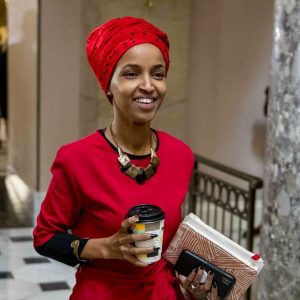
Speaking candidly, Omar said the president’s remarks go beyond political disagreement. “This level of dehumanizing language toward an entire community can lead to dangerous actions,” she stated, expressing concern about how such statements might be interpreted by listeners.
The Comments and the Response
While political clashes between Omar and Trump are not new, the latest exchange has reignited tensions. Omar has frequently been a vocal critic of Trump’s policies, particularly on immigration, civil rights, and foreign affairs. Trump, in turn, has often targeted Omar in speeches and social media posts.
In her interview, Omar argued that repeated references to her background and the Somali American community cross a line from policy critique into personal and communal attack. She emphasized that Somali Americans are part of the broader American fabric — business owners, public servants, students, and veterans.
“The Somali community is hardworking and resilient,” she said, underscoring the contributions of immigrants and refugees who have settled in Minnesota and across the country.
Broader Political Context
The exchange reflects ongoing national debates over immigration, identity, and political rhetoric. Somali Americans represent one of the largest East African diaspora communities in the United States, with significant populations in Minnesota. Omar herself came to the U.S. as a refugee and later became one of the first Muslim women elected to Congress.
Trump has often framed immigration policy in terms of national security and border enforcement. Supporters argue his rhetoric reflects strong positions on sovereignty and law enforcement. Critics contend that certain statements risk stigmatizing immigrant communities.
Political analysts note that public language used by national leaders can shape broader public discourse. Heated rhetoric may energize supporters but also intensify polarization.
Concerns About Dehumanization
During the interview, Omar focused heavily on what she described as the dangers of dehumanizing language. She suggested that portraying a community in negative or hostile terms can create an atmosphere where discrimination and hostility increase.
Civil rights advocates have long argued that rhetoric matters, particularly when it comes from high-profile public officials. They point to historical examples where inflammatory language preceded increases in bias-related incidents.
Supporters of the president, however, maintain that criticism of elected officials or policy positions does not equate to targeting an entire community. They argue that robust political debate is fundamental to democratic society.
A Pattern of Public Feuds
Omar and Trump have clashed repeatedly over the years. Past exchanges have included disagreements over foreign policy, refugee programs, and domestic legislation. Each confrontation has drawn widespread media attention, often amplifying divisions between political camps.
This latest dispute continues that pattern. Social media platforms quickly filled with commentary following Omar’s interview. Supporters praised her for speaking out, while critics accused her of politicizing the issue.
Community Reaction
Leaders within Minnesota’s Somali community expressed mixed reactions. Some voiced solidarity with Omar, saying they feel unfairly singled out in national debates. Others emphasized the importance of unity and dialogue, calling for measured responses rather than escalating rhetoric.
Local organizations reiterated their commitment to civic engagement and public service, highlighting the community’s role in Minnesota’s economic and cultural life.
The Role of Media
The interview with Margaret Brennan provided a national platform for Omar’s remarks. Media coverage has focused not only on the substance of her criticism but also on the broader implications for political discourse.
Observers point out that televised interviews often serve as catalysts for wider political conversation. By addressing the issue directly, Omar ensured the debate would remain in the public spotlight.
Looking Ahead
As election cycles intensify and national debates over immigration and identity continue, rhetoric is likely to remain sharp. Whether the current exchange will escalate further or lead to attempts at de-escalation remains unclear.
For Omar, the issue is deeply personal. She has repeatedly stated that her background as a refugee and Muslim woman informs her perspective on American democracy and inclusion. For Trump, strong rhetoric has long been a defining feature of his political style.
The broader question raised by this exchange is not only about two political figures, but about the tone of national leadership and the impact of public words.
In a polarized environment, language carries weight. Leaders’ statements can resonate far beyond immediate political circles, influencing public attitudes and community dynamics.
As debates continue, many Americans are left considering where the line lies between political critique and harmful rhetoric — and how the nation navigates those boundaries in a deeply divided era.
Leave a Reply