Newly released photos tell a quiet but powerful story of resilience as 24-year-old lineman Hunter Alexander continues his fight to save his hands after undergoing a fifth surgery. The images, shared with family permission, reveal both the physical toll of months of treatment and the fragile signs of healing that doctors say offer cautious encouragement.
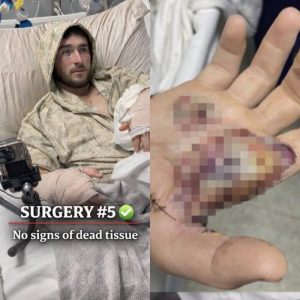
According to medical updates, Alexander’s right hand is showing healthy tissue with stable incisions and, critically, no signs of necrotic damage. Physicians describe this as a meaningful milestone in a long and uncertain recovery. On his left arm and hand, surgeons were able to partially close several wounds during the most recent procedure and reapply a wound vacuum device to support healing and reduce infection risk.
The progress, however, comes with significant challenges.
Doctors report that Alexander continues to experience severe pain, particularly deep muscle and nerve pain that has proven difficult to manage. While the surgical outcomes are encouraging, the recovery process remains complex and physically exhausting. Another operation is expected in approximately one week, though physicians say there is cautious hope he may be able to return home briefly between procedures if his pain can be controlled.
For Alexander and his family, the journey has been marked by long hospital days, uncertain timelines, and moments of both fear and gratitude.
“He’s making progress, but it’s still incredibly hard,” a family member shared. “Every small step forward matters, but the pain is real, and the road ahead is long.”
Alexander was critically injured while working during a devastating ice storm, responding to dangerous conditions to help restore power and heat for thousands of people. Linemen are often called to work in extreme weather, facing risks that most never see. In Alexander’s case, that risk became life-altering.
Medical teams have emphasized that saving function in his hands has been the central goal of the repeated surgeries. Each procedure has focused on removing damaged tissue, stabilizing wounds, preventing infection, and preserving as much mobility as possible. Specialists caution that outcomes in cases like Alexander’s can change rapidly, requiring constant reassessment and adjustment of treatment plans.
The photos released after the fifth surgery underscore that reality. Bandages, surgical lines, and medical devices remain ever-present, reminders that healing is not a straight line. Still, the absence of necrotic tissue on the right hand has brought a sense of relief to both doctors and loved ones, who know how easily setbacks can occur.
Pain management has become one of the most difficult aspects of care. Physicians describe Alexander’s discomfort as a combination of muscular trauma and nerve-related pain, which can be persistent and intense even as visible wounds improve. Managing that pain safely while allowing the body to heal is a delicate balance, particularly with additional surgeries on the horizon.
Despite the challenges, Alexander has remained mentally strong, according to those close to him. Family members say he is focused on recovery, taking encouragement from small improvements and the outpouring of support he has received from coworkers, community members, and strangers moved by his story.
Messages of support have poured in from fellow linemen across the country, many of whom understand firsthand the dangers of storm response work. Utility crews are often among the first to arrive and the last to leave disaster zones, restoring critical infrastructure under hazardous conditions. Alexander’s injury has renewed conversations within the industry about safety, preparedness, and the personal sacrifices workers make to keep communities running.
Doctors stress that the coming weeks will be critical. The next surgery will help determine whether additional closures are possible and how well the tissue continues to respond. Rehabilitation, they say, will be a lengthy process even under the best circumstances, requiring patience, physical therapy, and ongoing medical care.
For now, the possibility that Alexander could briefly return home between procedures represents a meaningful psychological boost. Being outside the hospital, even temporarily, could provide rest and a sense of normalcy after months of clinical surroundings. Whether that happens will depend entirely on pain control and medical stability.
The family has asked for continued prayers and positive thoughts, with a special focus on relief from Alexander’s pain.
“He risked his life so others could have heat and light,” the family said in a statement. “Right now, all we ask is for prayers for his comfort, strength, and healing.”
As winter storms fade from headlines and daily life returns to routine for many, Alexander’s story serves as a reminder of the human cost behind essential services. Power lines restored, homes warmed, and lights turned back on often come at the expense of workers who put themselves in harm’s way.
For Hunter Alexander, the fight is far from over. But with each surgery, each sign of healing, and each moment of support, hope remains—quiet, cautious, and fiercely held.
Leave a Reply