When news broke that Jeffrey Epstein had been found dead in his Manhattan jail cell on August 10, 2019, the world reacted with a shock that still hasn’t settled. The image of Epstein—wealthy financier, well-connected socialite, and central figure in one of the most unsettling criminal cases in recent U.S. history—flashed across every major news outlet within minutes. For many, the headline announcing his death marked not an end, but the beginning of a deeper storm.
Epstein’s death, officially ruled a suicide by New York City’s medical examiner, ignited a global wave of suspicion, frustration, and unanswered questions. Even now, years later, the public remains divided: some accept the medical conclusion, while others point to the extraordinary circumstances surrounding the case—his high-profile connections, the gravity of the charges, and the failures at the detention facility—as reasons to doubt the official story.

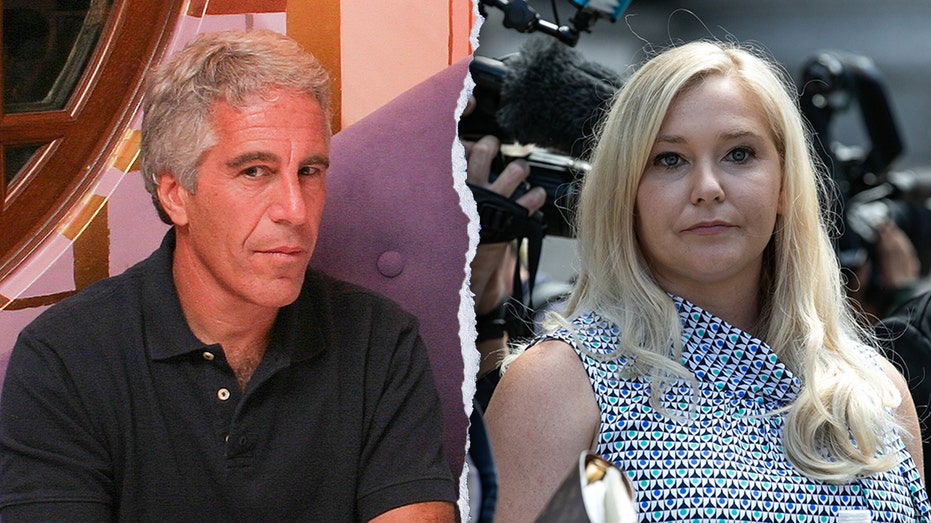
In the photograph accompanying this article, Epstein appears solemn, almost withdrawn—an expression that now seems eerily symbolic. At the time of his arrest in July 2019, he was charged with federal sex-trafficking offenses involving minors, a case that reopened long-standing concerns about how he had managed to avoid serious legal consequences for similar accusations more than a decade earlier. His social circle included some of the world’s most powerful figures in business, academia, politics, and royalty. These associations continue to fuel intense scrutiny and speculation.

His death cut short what promised to be one of the most consequential trials in modern American history. Prosecutors had described the charges against him as only “the opening move,” suggesting more arrests might follow. For the survivors who had come forward—some for the first time—the news was devastating. Many said they felt robbed of the opportunity to see Epstein face justice in a courtroom. Others expressed anger that he had been left unsupervised long enough to end his own life, despite being one of the most high-profile detainees in federal custody.
The Metropolitan Correctional Center (MCC), where Epstein was being held, soon became the center of intense public focus. Investigations revealed staffing shortages, protocol violations, and surveillance camera malfunctions, all contributing to the perception that his death could—and should—have been prevented. Two correctional officers were later charged with falsifying records, admitting they had failed to perform required checks on Epstein during the hours before he was found unresponsive.
These failures only deepened public distrust. The Department of Justice opened inquiries, the FBI launched investigations, and congressional committees demanded answers. Yet even with multiple official reports released, many questions remain unresolved, leaving space for theories, arguments, and continued debate.
Still, the broader story doesn’t end with Epstein’s death. In fact, it forced a shift in focus—a shift toward the network of individuals, institutions, and decisions that had enabled him for so many years. Civil lawsuits continued, survivors pushed forward, and previously sealed documents were ordered unsealed by courts. These documents—some heavily redacted—revealed new details about Epstein’s movements, relationships, and the structure of his operations. While they did not provide all the answers the public sought, they painted a clearer picture of the world Epstein inhabited, and the people who had crossed into it.
In the years since, several of Epstein’s associates have faced legal and public scrutiny. Most notably, Ghislaine Maxwell, a close companion and longtime associate, was convicted in 2021 for her role in facilitating Epstein’s crimes. Her conviction was seen by many as the closest the legal system could come to accountability after Epstein’s death. But to the survivors, it remains only partial justice.
Beyond the courtroom, Epstein’s case has had profound cultural impact. It reshaped conversations about institutional power, accountability, and the treatment of survivors of sexual exploitation. It highlighted the deep flaws within the criminal justice system, especially when accused individuals possess wealth, influence, or powerful connections. It also sparked public pressure for transparency—pressure that continues to this day, especially regarding sealed evidence and private settlements.
Internationally, Epstein’s name has become shorthand for systemic failure. Documentaries, books, investigative series, and in-depth news specials continue to examine the case from every angle, not to sensationalize the tragedy, but to understand how a man under investigation for such serious crimes could evade full accountability for so long. Many analysts argue that the enduring public fascination comes not from the man himself, but from the broader implications of the world he moved in.
The story, in truth, is no longer about Epstein alone. It is about the voices he tried to silence, the institutions that failed to act, and the justice system that allowed the case to collapse before it reached its full conclusion. And it is about a society reckoning with uncomfortable realities concerning power, privilege, and responsibility.
As the public continues to demand transparency, more documents are expected to be released in the coming months and years. Lawyers representing survivors say that while Epstein is no longer alive to answer for his actions, the pursuit of truth is far from over.
For the families, advocates, and individuals still seeking closure, one question remains at the center of everything:
How much of the truth has yet to surface?
And perhaps more importantly:
Will the world ever be ready for it when it does?
Leave a Reply