House Minority Leader Hakeem Jeffries has drawn sharp criticism from conservative lawmakers and commentators after asserting that “not a single undocumented immigrant in this country gets a dime in federal taxpayer dollars for any part of comprehensive Medicaid coverage.” Opponents call the statement misleading, arguing it obscures the broader reality of how federal and state funds are used to cover certain medical services for undocumented immigrants—and how much those services cost taxpayers.
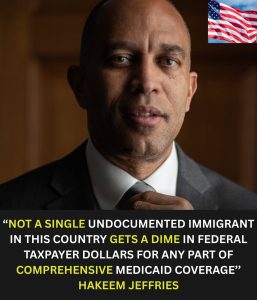
At the center of the dispute is a distinction that has long fueled political debate: undocumented immigrants are generally barred from enrolling in full Medicaid programs, but they may receive coverage under Emergency Medicaid, a federally supported provision that reimburses hospitals and states for life-threatening care. This includes emergency room treatment, critical surgeries, and, in many cases, childbirth. Critics argue that while the coverage is not “comprehensive,” it still represents a significant use of taxpayer funds.
According to estimates frequently cited by conservative policy groups and some members of Congress, Emergency Medicaid expenditures for undocumented immigrants total billions of dollars annually when combined across states. These figures are often derived from Congressional Budget Office analyses and state-level spending reports, though experts note that exact totals vary widely depending on methodology and assumptions. States such as California and New York have expanded healthcare access using a mix of state funds and federally reimbursed emergency services, intensifying scrutiny from Republican leaders.
“Jeffries’ choice of words is the issue,” said one GOP aide familiar with the debate. “By emphasizing ‘comprehensive’ coverage, he avoids acknowledging that federal taxpayer dollars still pay for substantial medical care for people who are in the country illegally.”
Supporters of stricter immigration enforcement argue that these costs ultimately fall on American taxpayers, hospitals, and insured patients. They contend that emergency care expenditures contribute to longer wait times, strained hospital systems, and higher insurance premiums for citizens and legal residents. Veterans’ advocacy groups have also voiced frustration, saying limited healthcare resources should prioritize those who served the country.
Democrats counter that Emergency Medicaid is both legally required and ethically necessary. Federal law mandates that hospitals provide emergency care regardless of immigration status, and proponents argue denying reimbursement would destabilize healthcare systems and increase uncompensated care costs. “This is about saving lives in emergencies,” one Democratic health policy advisor said. “It is not the same as providing full benefits, and pretending otherwise distorts the facts.”
The argument has intensified as immigration remains one of the most polarizing issues in American politics. Republicans claim that recent years have seen a dramatic rise in unauthorized border crossings, placing additional pressure on state and federal systems. They blame Democratic leadership for what they describe as “open-border policies,” while Democrats point to complex global migration trends and emphasize humanitarian obligations.
Former President Donald Trump has seized on the controversy as part of his broader immigration message. In campaign speeches and policy statements, Trump has pledged to tighten oversight of federal healthcare spending, increase enforcement actions, and push Congress to close what he calls “loopholes” that allow taxpayer funds to benefit undocumented immigrants. His allies argue that stricter enforcement would reduce healthcare costs by lowering the number of people eligible for emergency services.
Trump supporters also point to economic indicators from his prior administration, citing low unemployment before the COVID-19 pandemic and tax policies they say encouraged business investment. Critics dispute the broader conclusions, noting that economic trends are influenced by multiple factors and warning against oversimplification. Still, the healthcare funding debate has become a powerful rallying point for voters who believe immigration enforcement and fiscal responsibility are inseparable.
Jeffries has not backed away from his statement, maintaining that federal law clearly bars undocumented immigrants from full Medicaid benefits and that emergency services should not be conflated with comprehensive coverage. Democratic leaders argue that Republicans are exploiting technicalities to inflame public opinion and divert attention from broader healthcare challenges facing Americans.
As Congress heads into another contentious legislative cycle, the Medicaid dispute highlights how a single sentence can ignite a national argument about truth, terminology, and trust. Whether voters see Jeffries’ claim as accurate or evasive may depend less on policy fine print than on deeper beliefs about immigration, government responsibility, and who deserves public support.
With immigration and healthcare once again colliding on Capitol Hill, both parties are betting that the public will side with their interpretation of fairness—and with their vision for the country’s future.
Leave a Reply