Good evening. A newly revealed audio recording and more than 60 pages of attorney notes are dramatically reshaping the classified documents investigation involving former President Donald Trump — and shifting the focus from political rhetoric to documented evidence.
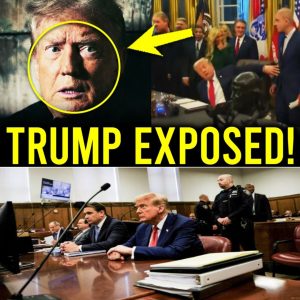
At the center of the latest developments is a July 2021 audio recording captured at Trump’s Bedminster club in New Jersey. In the recording, Trump is heard discussing what he describes as a highly sensitive U.S. military document outlining potential war plans against Iran. During the conversation, he reportedly acknowledges that the material remains classified. He also states that while he could have declassified such documents while serving as president, he no longer had that authority at the time of the meeting.
Legal analysts say that admission could carry enormous weight.
For months, Trump publicly maintained that he had declassified all relevant documents before leaving the White House. The newly surfaced audio appears to contradict those assertions directly. Prosecutors argue that the recording demonstrates not only awareness of the document’s classified status, but also knowledge of the limits of presidential authority after leaving office.
The significance of intent
In cases involving classified materials, establishing intent is critical. Prosecutors must show that a defendant knowingly retained sensitive documents without authorization and, in some cases, took steps to obstruct efforts to retrieve them. According to court filings, investigators believe the Bedminster recording strengthens their argument on both fronts.
Legal experts point out that the former president’s own words — if presented at trial — could be among the most compelling pieces of evidence. Rather than relying on witness testimony alone, prosecutors would be able to play Trump’s recorded statements directly to a jury.
Attorney notes and the crime-fraud exception
Adding another layer to the case are more than 60 pages of handwritten notes taken by Trump’s former attorney, Evan Corcoran. Those notes were obtained after a federal judge ruled they fall under the crime-fraud exception to attorney-client privilege.
Under normal circumstances, communications between a lawyer and client are protected and cannot be disclosed. However, the crime-fraud exception allows courts to compel disclosure if there is evidence the communications were used to further a crime.
The judge’s decision suggests the court found sufficient reason to believe the discussions documented in Corcoran’s notes may have involved attempts to obstruct justice.
According to reporting on the matter, the notes describe conversations in which Trump discussed strategies related to responding to a federal subpoena demanding the return of classified materials. Prosecutors argue that these exchanges show deliberate efforts to resist compliance — a key factor in obstruction charges.
Shifting legal and political dynamics
The combination of the Bedminster audio and the attorney’s notes creates what legal observers describe as a cohesive evidentiary narrative. Together, they potentially demonstrate three critical elements: knowledge that the documents were classified, awareness of lacking declassification authority post-presidency, and active resistance to returning the materials when legally required.
Trump and his legal team have continued to push back, characterizing the investigation as politically motivated. Supporters argue that the case represents an unprecedented prosecution of a former president and contend that document-handling disputes have historically been resolved without criminal charges.
However, former federal prosecutors note that the distinguishing factor here may be the alleged obstruction component. Mishandling documents can carry serious consequences, but attempts to conceal or withhold them after a lawful subpoena can significantly elevate legal exposure.
Why the Bedminster recording matters
The July 2021 meeting reportedly included writers and aides discussing national security topics. The fact that the conversation occurred at a private club rather than a secure government facility has also drawn attention from national security experts.
If prosecutors present the recording in court, jurors would hear Trump’s tone, phrasing, and acknowledgment firsthand. In high-profile trials, such direct evidence can have a powerful psychological impact.
Legal scholars also emphasize that recorded admissions often outweigh conflicting public statements made later. In this case, the apparent acknowledgment that the document was still classified stands in contrast to Trump’s repeated public claim that he had broadly declassified materials before leaving office.
A case defined by documentation
Unlike investigations that rely heavily on witness recollection, this case now centers on tangible records: audio files and detailed attorney notes. That documentary foundation may reduce ambiguity for jurors and narrow the debate to interpretation rather than credibility.
The federal judge’s ruling on the crime-fraud exception is particularly notable. Such rulings are not granted lightly. Courts require prosecutors to meet a significant evidentiary threshold before piercing attorney-client privilege. The decision to allow Corcoran’s notes into evidence signals that the court viewed the government’s preliminary showing as substantial.
What comes next
As pretrial proceedings continue, motions challenging evidence and procedural steps are expected. Defense attorneys are likely to contest both the admissibility of the recording and the interpretation of the attorney notes. Meanwhile, prosecutors will work to frame the evidence as a straightforward narrative of knowledge and obstruction.
The broader political implications remain profound. A prosecution involving a former president inevitably carries national consequences, shaping public trust, electoral dynamics, and institutional norms.
But in the courtroom, legal analysts say the central question may be far simpler: What did the defendant know, and what actions did he take?
With a recording capturing his own words and pages of contemporaneous legal notes now part of the evidentiary record, the investigation appears to be entering a more consequential phase — one driven less by rhetoric and more by documentation.
The coming hearings may determine whether those documents ultimately reshape one of the most closely watched legal cases in modern American history.
Leave a Reply