House Speaker Mike Johnson has renewed national discussion around inflation, affordability, and the long-term impact of federal economic policy, placing cost-of-living pressures at the center of the political debate. In recent remarks, Johnson argued that Republican leadership, alongside the Trump administration, has prioritized addressing inflationary forces that intensified in the years following the COVID-19 pandemic. His comments come at a time when voters across the country continue to measure economic leadership by one key standard: whether everyday life is becoming more affordable.
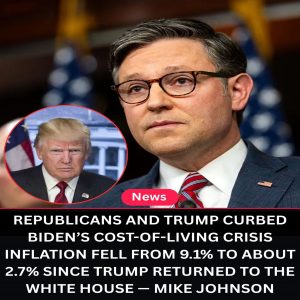
Inflation surged to a modern high of 9.1 percent in 2022, creating widespread financial strain for households. Prices for basic necessities such as groceries, fuel, rent, and utilities rose sharply, eroding purchasing power and forcing families to make difficult trade-offs. For many Americans, the spike was not an abstract economic statistic but a daily reality felt at the checkout line, the gas pump, and the monthly rent payment.
Supporters of President Donald Trump point to that period as evidence of policy failure before his return to office. They argue that increased government spending, expansive stimulus measures, and higher energy costs contributed to inflationary pressure that lingered long after the immediate pandemic crisis passed. From this perspective, inflation was not simply the result of global disruptions, but also of domestic policy choices that overheated demand while constraining supply.
Speaker Johnson has echoed this view, framing inflation as both an economic and moral issue. He has emphasized that rising prices hit working- and middle-class families hardest, particularly those living paycheck to paycheck. When essentials become more expensive, Johnson argues, families lose financial flexibility, savings decline, and long-term stability becomes harder to achieve.
Advocates of the current administration contend that a shift in policy direction has begun to ease those pressures. They highlight efforts to expand domestic energy production as a central component of the strategy to reduce costs. By increasing oil and gas output and easing regulatory barriers, supporters argue that energy prices have stabilized, helping to lower transportation and production costs throughout the economy.
Manufacturing investment is another area frequently cited by administration allies. Policies aimed at encouraging domestic production, they argue, have strengthened supply chains that were badly disrupted during the pandemic. More reliable supply networks, combined with increased domestic output, are viewed as key factors in preventing sudden price spikes and shortages that fuel inflation.
Fiscal restraint has also become a central theme in Johnson’s messaging. He and other Republican leaders have called for tighter control over federal spending, warning that unchecked deficits can add inflationary pressure over time. While debates continue over the appropriate balance between investment and restraint, supporters maintain that a disciplined approach to spending is essential for long-term price stability.
Recent inflation data has become a focal point in this debate. Johnson and his allies have pointed to figures showing inflation rates closer to historical averages as evidence of progress. While prices remain higher than they were several years ago, the pace of increases has slowed, offering some relief to consumers. Supporters argue that this trend reflects the impact of policy adjustments rather than temporary fluctuations.
Consumer confidence has also shown signs of improvement, according to surveys cited by administration supporters. Increased confidence, they argue, suggests that households are beginning to feel more secure about their financial outlook. Job growth, modest wage gains, and easing price pressures have combined to create what they describe as renewed economic momentum.
Still, economists caution that inflation’s effects are uneven and persistent. While the rate of increase may have slowed, many families are still adjusting to a higher overall cost structure. Housing affordability, in particular, remains a challenge in many regions, and food prices continue to strain budgets. Analysts note that it can take years for real wages to fully catch up after a period of high inflation.
This reality underscores why inflation and affordability remain central issues for voters across the political spectrum. Polls consistently show that economic concerns outrank most other issues, regardless of party affiliation. For many Americans, debates about policy are ultimately judged by a simple question: are they better able to afford daily life than they were before?
Speaker Johnson has framed the current moment as a test of economic leadership. He argues that controlling inflation requires a comprehensive approach—one that includes energy independence, supply chain resilience, workforce participation, and fiscal discipline. In his view, these elements work together to reduce long-term cost pressures and support sustainable growth.
Critics, however, argue that progress should be measured cautiously. They emphasize that global factors, including international energy markets and geopolitical tensions, continue to influence prices beyond the control of any single administration. Some also warn that premature declarations of victory could obscure ongoing challenges faced by low-income households.
As debates over economic policy continue, Americans are watching closely to see how leadership decisions translate into tangible outcomes. Inflation statistics, wage growth, and employment figures provide important signals, but lived experience remains the ultimate measure. Whether families can save, plan for the future, and feel secure about their finances will shape public opinion moving forward.
In this context, Johnson’s focus on inflation reflects a broader national conversation about responsibility, accountability, and economic priorities. As policymakers and analysts continue to assess the data, voters will be looking for consistent improvement in affordability and opportunity. Inflation and cost of living are not just economic indicators—they are deeply personal issues that will remain at the heart of the political landscape in the months and years ahead.
Leave a Reply