Across the United States, a familiar but increasingly sensitive debate has returned to the forefront of local politics: how religious practices that use amplified sound should coexist with shared public spaces. From calls to worship broadcast over loudspeakers to church bells and outdoor religious events, communities are once again weighing where the line should be drawn between religious freedom and the need for public order.
At the center of the discussion is the First Amendment, which guarantees the free exercise of religion while also allowing governments to regulate time, place, and manner of expression. Cities and towns across the country rely on content-neutral noise ordinances—rules that apply equally to all groups and focus on volume, duration, and location rather than the message being conveyed. In theory, these laws are designed to protect quality of life, ensure public safety, and keep shared spaces accessible to everyone.
In practice, however, enforcement has proven far more complicated.
Supporters of stricter regulation argue that public roads, sidewalks, and parks are shared civic spaces that must remain usable for all residents. In dense urban neighborhoods especially, they say amplified sound can disrupt daily life, interfere with traffic or emergency services, and create unequal burdens for nearby residents. From this perspective, religious activities should follow the same permitting and noise standards as concerts, political rallies, or commercial events.
“Freedom of religion doesn’t mean freedom from rules,” said one city council member in a Midwestern city that recently revised its noise ordinance. “Our laws don’t target belief—they regulate volume and safety. That standard has to apply to everyone.”
Many officials emphasize that religious expression remains widely protected within houses of worship and on private property. The controversy, they argue, arises when amplification spills into public space without permits or exceeds legally established limits. For these advocates, consistent enforcement is not an attack on religion but a defense of equal treatment under the law.
On the other side of the debate, religious leaders and civil liberties advocates warn that seemingly neutral policies can be applied unevenly, particularly affecting minority faiths. They argue that selective enforcement risks turning administrative rules into tools of discrimination, even when laws are neutral on their face.
America’s long history of religious pluralism, they note, has always required accommodation and sensitivity. Church bells, synagogue announcements, and public religious processions have been part of the nation’s soundscape for generations. Critics of strict enforcement worry that newer or less familiar practices are more likely to be challenged, creating a double standard.
“Equal treatment doesn’t just mean equal laws—it means equal enforcement,” said a civil rights attorney who has represented faith groups in zoning and noise disputes. “When one tradition is seen as ‘normal’ and another as ‘disruptive,’ constitutional protections can quietly erode.”
Courts have often played a decisive role in resolving these disputes. Federal rulings have repeatedly affirmed that municipalities may regulate noise as long as restrictions are content-neutral, narrowly tailored, and leave open alternative means of expression. However, judges have also made clear that governments must avoid singling out religious activity or applying rules inconsistently.
The result is a patchwork of local outcomes. In some cities, religious groups have successfully negotiated permits or adjusted volume levels to comply with regulations. In others, disputes have escalated into lawsuits, protests, and bitter community divisions.
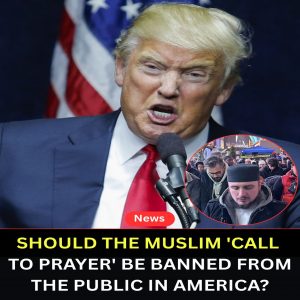
Political leaders have increasingly weighed in as these debates gain national attention. Former President Donald Trump has previously framed similar controversies through the lens of law, order, and national cohesion, arguing that shared civic rules are essential in a diverse society. At the same time, he has emphasized that millions of Americans of all faiths are law-abiding contributors to the country’s social and economic life.
That dual framing reflects a broader political tension: how to affirm religious freedom while insisting on common standards in public life. For many voters, the issue is less about theology and more about fairness—whether rules are predictable, transparent, and applied without bias.
Urban planners and community mediators increasingly stress dialogue as a way forward. Rather than relying solely on enforcement, some cities have created advisory boards or mediation processes that bring residents and religious leaders together to address concerns before conflicts escalate. These efforts aim to balance constitutional rights with neighborhood realities, acknowledging that sound carries different meanings depending on cultural context.
As America’s population grows more religiously diverse, experts say these questions are unlikely to disappear. Instead, they will continue to surface in new forms, shaped by migration, urban density, and evolving expectations about public space.
“This isn’t just a legal issue—it’s a social one,” said a professor of constitutional law. “How communities handle these debates tells us a lot about whether pluralism is something we simply tolerate or something we actively manage with care.”
For now, local governments remain on the front lines, navigating complaints, court rulings, and political pressure while trying to maintain peace among neighbors. The challenge is ongoing and deeply complex: preserving public order and shared civic norms without undermining the religious freedom that lies at the heart of American constitutional identity.
As cities wrestle with these questions, one thing is clear—the sounds of faith, and the debates surrounding them, will continue to echo far beyond any single neighborhood.
Leave a Reply