
The Chiefs’ Kansas Move Exposes the Hunt Family’s Ingratitude Toward Their True Home
For decades, the Kansas City Chiefs have been more than just a football team — they have been a civic identity, a shared heartbeat, and a symbol of loyalty between a franchise and its fans. That’s why the possibility of the Chiefs moving to Kansas doesn’t just feel like a business decision. To many in Missouri, it feels like a betrayal. And to critics, it exposes what they see as a deeper truth: the growing ingratitude of the Hunt family toward the city that helped build their NFL empire.
This isn’t just about stadiums, taxes, or incentives. It’s about history — and who benefits from it.
The Chiefs’ legacy was forged in Missouri. From Arrowhead Stadium’s deafening roar to generations of fans who filled seats through losing seasons and championship runs alike, Kansas City, Missouri gave the franchise something no balance sheet can measure: unwavering loyalty. That loyalty didn’t disappear when times were tough. It didn’t vanish before Patrick Mahomes arrived. It endured.
Yet now, as negotiations intensify and leverage becomes the language of choice, that loyalty appears to be treated as expendable.
Supporters of a Kansas move argue that it’s simply smart business. Kansas officials are reportedly willing to offer attractive incentives, modern infrastructure, and financial flexibility that Missouri leaders have hesitated to match. From a corporate standpoint, the argument is straightforward: follow the best deal.
But professional sports franchises aren’t ordinary corporations — especially not ones built on public support, public funding, and public passion. The Chiefs didn’t become a global brand in isolation. They became one because Missouri invested in them, believed in them, and stood by them long before Lombardi Trophies were guaranteed.
That’s what makes the situation sting.
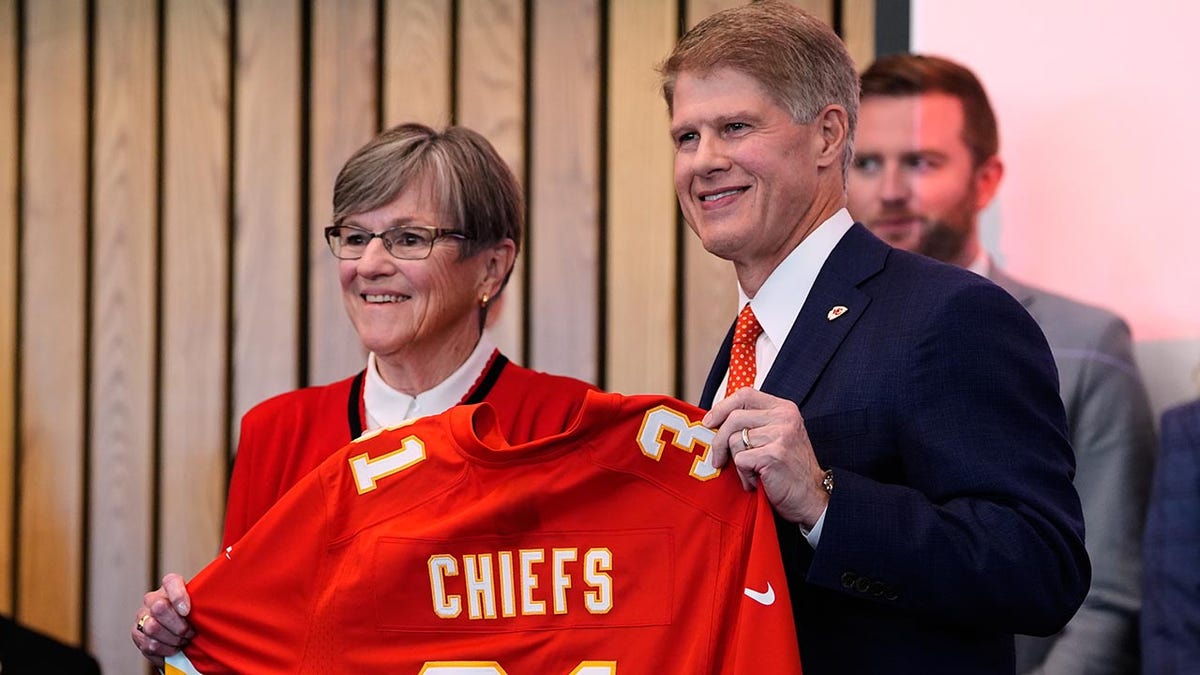
The irony is hard to ignore. Kansas leaders have embraced the Chiefs with open arms, often leaning into symbolism and branding — mascots, slogans, and promotional campaigns — as if history itself can be transplanted across state lines. But critics argue that no amount of artificial symbolism can replace the authentic bond forged over decades in Missouri.
You can build a new stadium.
You can design new logos.
You can sell a fresh narrative.
But you cannot recreate history.
To many fans, the Hunt family’s willingness to entertain relocation talks feels less like negotiation and more like leverage — using the threat of departure to squeeze public money from communities that already gave so much. That tactic has become increasingly common in modern sports, but familiarity doesn’t make it respectable.
This is where the accusation of ingratitude takes root.
Missouri taxpayers helped fund Arrowhead Stadium. Missouri fans sold out games in losing seasons. Missouri embraced the Chiefs as family. And now, when public skepticism around billion-dollar stadium subsidies grows — understandably — the response appears to be: pay up, or we’ll leave.
That message lands poorly in an era where communities are demanding accountability. Schools, infrastructure, housing, and public safety are all competing for funding. Asking residents to bankroll another massive stadium while threatening to walk away feels tone-deaf at best.
Defenders of the Hunt family argue that loyalty doesn’t pay construction bills and that the NFL is a business driven by revenue maximization. They’re not wrong — but that argument cuts both ways. If loyalty only matters when it’s profitable, then fans are justified in questioning whether franchises deserve public support at all.
The Chiefs’ success under Patrick Mahomes has only sharpened the tension. Winning brought global attention, massive revenue, and increased franchise value. Ironically, that success now appears to be used as leverage against the very community that supported the team long before championships were guaranteed.
That’s why this moment matters beyond football.

If the Chiefs ultimately move to Kansas, it won’t just be a change of address. It will be a signal — to fans everywhere — that devotion is conditional, that history is negotiable, and that public loyalty is secondary to private gain.
And for Missouri fans, the wound would linger long after kickoff in a new stadium.
Because what’s being lost isn’t just a team. It’s trust.
Sports thrive on emotional contracts between teams and communities. Break that contract too often, and fans stop believing. They stop investing. They stop caring the same way.
The Hunt family still has a choice. They can engage in negotiations that respect the past as much as the future. Or they can chase the best offer and accept the consequences that come with it — including the lasting perception that gratitude was sacrificed for leverage.
In the end, this debate isn’t about Kansas versus Missouri.
It’s about whether loyalty still means something in modern sports — or whether it’s just another asset to be traded when the price is right.
Leave a Reply