Clayton Kershaw has never been shy about responsibility. For 18 seasons, he carried the weight of expectations in Los Angeles, and now — freshly retired and armed with a Hall of Fame résumé — he’s carrying a different kind of message. According to one of the chief architects of the modern Dodgers, their growing dynasty isn’t bad for baseball. It’s good for it.
“I think that was the way the Yankees were,” Kershaw said during a recent appearance on Literally! With Rob Lowe. “When I was growing up, the Yankees were the best team — in the World Series and winning all those. But I think that’s good for baseball. I really do.”
It was a statement that instantly reignited a league-wide debate. Are the Dodgers ruining competitive balance — or fueling the sport’s relevance?
Kershaw’s answer was direct, almost blunt.
“Having a team that you either love, because that’s your team, or you hate because they keep winning — that’s good for baseball.”
Coming from anyone else, the comment might sound like justification. Coming from Kershaw, it sounds like perspective earned the hard way.
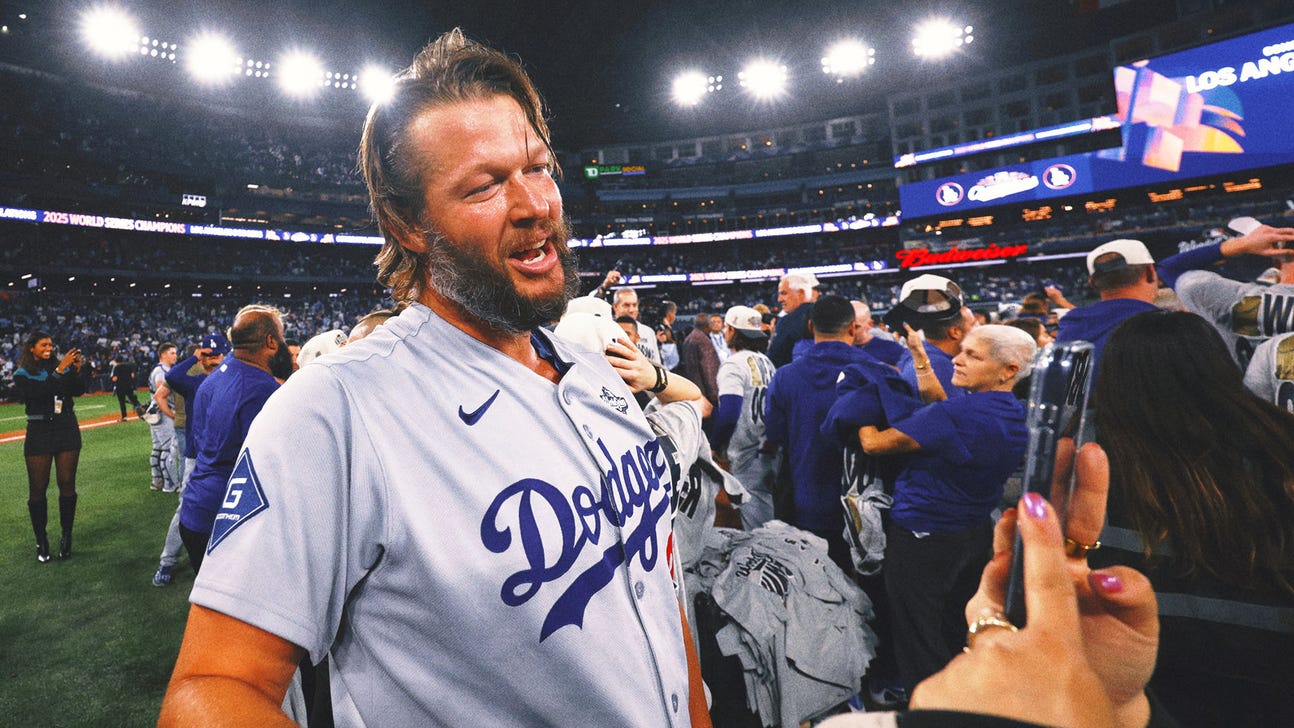
Kershaw walked away after the 2025 season with nothing left to prove. An 11-time All-Star. Three-time NL Cy Young Award winner. A league MVP. A Gold Glove recipient. A member of the exclusive 3,000-strikeout club. And, finally, a three-time World Series champion. His final chapter ended perfectly — celebrating with the Commissioner’s Trophy after defeating the Toronto Blue Jays in a dramatic Game 7 of the 2025 World Series at Rogers Centre.
Even in his final season, limited by injuries, Kershaw remained impactful. He went 11–2 with a 3.36 ERA across 23 regular-season appearances, then delivered a crucial relief out in Game 3 of the World Series — a symbolic reminder that his presence still mattered when it mattered most.
But Kershaw’s comments weren’t about nostalgia. They were about momentum.
The Dodgers have quietly — and sometimes loudly — become baseball’s new standard. Back-to-back World Series titles. Four Fall Classic appearances in the past eight years. A roster that reads like an All-Star ballot. And an aggressive philosophy that refuses to apologize for winning.

Los Angeles’ dominance has been fueled by star power and precision. Shohei Ohtani, back-to-back NL MVP. Japanese ace Yoshinobu Yamamoto. Former MVPs Freddie Freeman and Mookie Betts. Two-time Cy Young winner Blake Snell. And this offseason, the Dodgers doubled down again by signing former Mets closer Edwin Díaz.
This isn’t accidental success. It’s engineered.
And it’s why the comparisons to the late-1990s and early-2000s Yankees feel unavoidable. That New York team won four World Series titles in five seasons, becoming the sport’s ultimate villain — or hero, depending on where you stood. Ratings soared. Stadiums filled. Everyone watched, whether they wanted to cheer or boo.
Kershaw believes baseball needs that again.
“You don’t want to be indifferent,” he said. “That’s what viewership is.”
Not everyone agrees. Commissioner Rob Manfred recently told ESPN that the Dodgers are “probably more profitable on a percentage basis than the old Yankees were,” suggesting their model may be even more sustainable — and more problematic. With MLB’s collective bargaining agreement set to expire next December, salary-cap discussions are expected to dominate negotiations, and the Dodgers’ spending-and-winning machine could become Exhibit A as fears of a lockout loom.
Yet Kershaw sees a different side of the equation.

He points to the Dodgers’ global reach — particularly their ability to attract elite Japanese talent — and the international attention generated by the 2025 World Series, especially with Los Angeles defeating Toronto on baseball’s biggest stage. In an era where MLB is chasing relevance beyond North America, the Dodgers have become a gateway.
For Kershaw, that matters.
This postseason, Dodgers games weren’t just watched — they were followed, debated, argued over. Social media buzzed. International fan bases tuned in. Indifference vanished. And that, in his view, is the real victory.
In many ways, Kershaw’s career mirrors the argument itself. For years, he was scrutinized, doubted, and criticized for October shortcomings. He became polarizing — admired by some, questioned by others. But nobody ignored him. And in the end, his persistence reshaped the narrative.
Now, as the Dodgers sit atop the sport once again, the same dynamic applies. Fans can complain about payrolls. Rivals can roll their eyes at another Los Angeles celebration. But they’re still watching.
And that’s the point.
Clayton Kershaw isn’t defending a dynasty out of loyalty alone. He’s defending an idea — that baseball thrives on dominance, on emotion, on teams that force reactions. Love them. Hate them. Argue about them.
Just don’t ignore them.
Because as long as the Dodgers keep winning, baseball — according to one of its greatest pitchers — stays very much alive.
Leave a Reply