In the heart of New York City, where cultures, religions, and histories intersect every day, Zohran Mamdani has emerged as a distinctive political figure whose rise reflects deeper shifts within the city’s Muslim communities. As a state assemblymember representing parts of Queens, Mamdani’s political journey is closely tied to the lived experiences of Muslim New Yorkers—immigrants, second-generation Americans, workers, students, and families who have long shaped the city but often felt sidelined in its political life.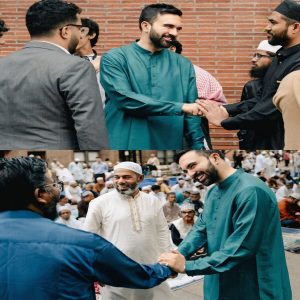
Zohran Mamdani is not simply a Muslim politician in New York; he is a product of the city’s diversity and contradictions. Born in Uganda to an academic family and raised in New York, Mamdani represents a generation that navigates multiple identities at once—Muslim, immigrant, progressive, and unapologetically political. His rise has resonated with many Muslim New Yorkers who see in him a reflection of their own struggles: the fight for affordable housing, dignified work, public safety without discrimination, and equal political representation.
For decades, New York City’s Muslim population—estimated at over one million people—has played a crucial role in the city’s economic and cultural life. Muslims work as taxi drivers, healthcare workers, small business owners, teachers, and civil servants. Yet despite their numbers, political power has often lagged behind. Issues such as surveillance after 9/11, Islamophobia, housing insecurity, and labor exploitation have deeply affected Muslim neighborhoods, particularly in boroughs like Queens and Brooklyn. Mamdani’s political voice has helped bring many of these concerns into mainstream legislative debate.
One of the defining aspects of Mamdani’s appeal is his ability to connect faith, justice, and policy without turning religion into a political weapon. While he does not govern through religious doctrine, he openly acknowledges how Islamic values—such as social responsibility, care for the poor, and opposition to injustice—inform his worldview. This transparency has been meaningful to Muslim constituents who are used to seeing their faith either ignored or portrayed negatively in political discourse.
At the same time, Mamdani’s politics go beyond religious identity. His platform focuses heavily on universal economic issues that affect working-class New Yorkers of all backgrounds. From advocating for fare-free public transportation to pushing for tenant protections and increased funding for public services, he frames Muslim concerns as inseparable from broader struggles facing the city. This approach has helped him build coalitions that extend well beyond the Muslim community, positioning him as a representative of shared urban challenges rather than a single demographic group.
Within New York City’s Muslim communities, reactions to Mamdani have been largely positive, though not without debate. Many young Muslims see him as proof that they do not need to choose between faith and political activism. His presence in Albany signals that Muslim voices can be assertive, progressive, and influential without apologizing for who they are. Community organizations, mosques, and youth groups have increasingly engaged in civic education and voter registration efforts, inspired in part by the visibility of leaders like Mamdani.
However, there are also tensions. New York’s Muslim population is not monolithic. It includes people from South Asia, the Middle East, Africa, the Caribbean, and beyond, with a wide range of political views. Some more conservative Muslims question Mamdani’s alignment with left-wing politics, while others worry that outspoken stances on controversial issues could invite backlash or reinforce stereotypes. These internal debates reflect a community still negotiating its political identity in a polarized national climate.
The broader significance of Mamdani’s rise lies in what it says about representation in American cities. For years, Muslims have been discussed primarily in the context of national security, foreign policy, or cultural conflict. Mamdani shifts that narrative toward everyday governance—rent, transit, healthcare, and education. In doing so, he helps normalize Muslim participation in democratic institutions, not as an exception, but as a natural outcome of pluralism.
His visibility also comes at a time when Islamophobia remains a persistent concern. Hate crimes, discriminatory rhetoric, and policy debates around immigration and surveillance continue to affect Muslim New Yorkers. Mamdani’s presence in government challenges the idea that Muslims must remain on the margins of power. It also places responsibility on political institutions to address bias not just rhetorically, but structurally.
Looking ahead, the relationship between Zohran Mamdani and New York City’s Muslim communities may shape future political engagement across the city. As younger, more diverse voters become active, the demand for representatives who understand intersectional identities is likely to grow. Mamdani’s trajectory suggests that political success in New York increasingly depends on authenticity, grassroots organizing, and a willingness to confront uncomfortable realities.
Whether one agrees with his policies or not, Zohran Mamdani represents a turning point. His role highlights how Muslim New Yorkers are moving from being subjects of political discussion to active participants shaping the city’s future. In a place as complex as New York, that shift is not just symbolic—it is transformative.
Leave a Reply